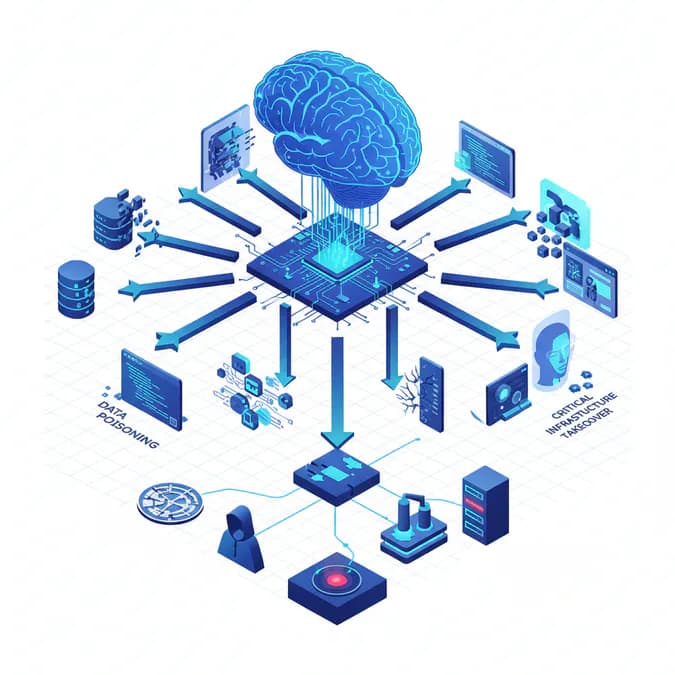
Emerging research from CyberScoop reveals a transformative trend in digital warfare: state-sponsored hackers are systematically integrating artificial intelligence into their attack strategies. These AI cybersecurity threats are reshaping the landscape of cyber warfare, making it essential for organizations to understand and adapt. The integration of AI technologies into cyber attacks not only enhances the effectiveness of these threats but also complicates the defenses against them.
AI in Cybersecurity Threats
The landscape of cyber threats is rapidly evolving, with advanced AI technologies like Google's Gemini becoming powerful tools for malicious actors. Unlike traditional hacking methods, AI-powered approaches enable unprecedented automation and sophistication in cyber intrusions. This evolution in AI cybersecurity threats poses significant challenges for global cybersecurity defenses. As AI continues to develop, the capabilities of state-sponsored hackers will only become more advanced, making it crucial for organizations to stay informed and prepared.
State-Sponsored Hacking Techniques
- Automated reconnaissance of potential targets
- Intelligent vulnerability scanning
- Dynamic attack strategy generation
- Rapid social engineering script creation
Gemini AI and Cyber Reconnaissance
Google's research indicates that state-sponsored groups are utilizing Gemini across multiple attack stages, dramatically reducing manual intervention and increasing attack efficiency. This representa significant escalation in cyber threat capabilities. The integration of AI into these strategies exemplifies the growing sophistication of AI cybersecurity threats. As organizations face these evolving threats, understanding the role of AI in cyber reconnaissance becomes essential for developing effective defense mechanisms.
Implications for Cybersecurity Defenses
Organizations must now develop AI-powered defensive strategies that can dynamically respond to machine-learning enabled attacks. This requires:
- Advanced threat detection algorithms
- Continuous AI model training
- Proactive vulnerability assessment
- Real-time threat intelligence integration
By implementing these strategies, organizations can better prepare themselves against the increasing sophistication of AI cybersecurity threats.
The Bottom Line
As AI technologies become more accessible, the cybersecurity battlefield is fundamentally transforming. Defensive strategies must evolve at machine speed to counter these emerging AI cybersecurity threats. Experts emphasize the need for organizations to stay ahead of these developments to protect sensitive information and infrastructure. According to a cybersecurity analyst, "The integration of AI in cyber warfare is not jusa trend; it is a new reality that organizations must face head-on."
Frequently Asked Questions (FAQ)
What are AI cybersecurity threats?
AI cybersecurity threats refer to the use of artificial intelligence by malicious actors to enhance their hacking capabilities, making attacks more efficient and harder to detect.
How do state-sponsored hackers use AI?
State-sponsored hackers leverage AI for tasks such as automated reconnaissance, vulnerability scanning, and creating dynamic attack strategies, significantly increasing their effectiveness.
What can organizations do to defend against AI cybersecurity threats?
Organizations should implement advanced threat detection systems, continuously train AI models, and integrate real-time threat intelligence to effectively counter AI-driven attacks.