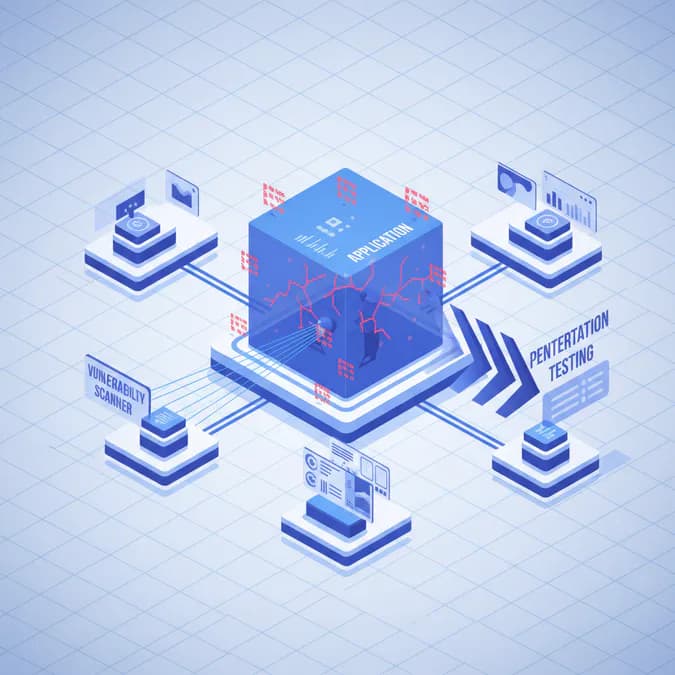
Understanding Application Security Vulnerabilities in 2026

Application security vulnerabilities continue to evolve as threat actors develop more sophisticated attack methods. In 2026, organizations face a complex landscape of security challenges that require comprehensive understanding and proactive defense strategies. Understanding the most critical application security vulnerabilities is essential for any organization looking to protect its digital assets and maintain customer trust.
The threat landscape for applications has shifted dramatically over recent years. Legacy vulnerabilities persist while new attack vectors emerge from cloud adoption, API proliferation, and increased reliance on third-party dependencies. Security teams must stay informed about these evolving threats to implement effective protection measures.
The 11 Critical Application Security Vulnerabilities
1. Injection Attacks Remain a Top Threat
Injection attacks, including SQL injection, command injection, and LDAP injection, continue to rank among the most dangerous application security vulnerabilities. These attacks exploit improper input validation and allow attackers to execute unauthorized commands or access sensitive data. Despite decades of awareness, injection vulnerabilities persist in production applications because developers sometimes fail to implement proper input sanitization and parameterized queries.
2. Broken Authentication and Session Management
Weaknesses in authentication mechanisms create significant security gaps. Inadequate password policies, insecure session handling, and poor credential management enable attackers to compromise user accounts and gain unauthorized access. Multi-factor authentication adoption remains inconsistent across enterprises, leaving many applications vulnerable to credential-based attacks.
3. Sensitive Data Exposure
Applications often fail to properly protect sensitive information including personal data, financial records, and intellectual property. Inadequate encryption, insecure data transmission, and improper storage mechanisms expose critical information to unauthorized access. Compliance requirements like GDPR and CCPA have increased the importance of data protection, yet many organizations struggle with implementation.
4. XML External Entity (XXE) Vulnerabilities
XXE attacks exploit XML processors that are configured to process external entities. These vulnerabilities can lead to data disclosure, denial of service, and server-side request forgery attacks. Applications that parse XML without proper validation remain susceptible to these attacks, particularly in API-driven architectures.
5. Broken Access Control
Access control vulnerabilities allow users to perform actions beyond their authorized permissions. Horizontal privilege escalation, vertical privilege escalation, and insecure direct object references enable attackers to access unauthorized resources. Many applications implement access controls inconsistently across different endpoints and functions.
6. Security Misconfiguration
Default configurations, unnecessary services, outdated software, and missing security headers create exploitable vulnerabilities. Cloud misconfigurations have become increasingly common as organizations migrate to cloud platforms without properly implementing security controls. Security misconfiguration often results from insufficient security awareness and inadequate deployment procedures.
7. Cross-Site Scripting (XSS) Vulnerabilities
XSS attacks inject malicious scripts into web applications, compromising user sessions and stealing sensitive information. Reflected XSS, stored XSS, and DOM-based XSS remain prevalent in modern applications. Inadequate input validation and output encoding leave applications vulnerable to these attacks.
8. Insecure Deserialization
Applications that deserialize untrusted data without proper validation face significant risks. Attackers can exploit deserialization vulnerabilities to execute arbitrary code, modify application behavior, or gain system access. This vulnerability is particularly dangerous in Java, Python, and other languages with powerful serialization frameworks.
9. Using Components with Known Vulnerabilities
Dependencies on third-party libraries and frameworks introduce inherited vulnerabilities. Many organizations lack visibility into their software supply chain and fail to track vulnerable components. The increasing complexity of modern applications, with dozens or hundreds of dependencies, makes vulnerability management increasingly challenging.
10. Insufficient Logging and Monitoring
Applications that lack comprehensive logging and monitoring capabilities cannot detect or respond to security incidents effectively. Inadequate logging prevents forensic analysis and incident response. Many organizations struggle to correlate logs across multiple systems and identify suspicious patterns.
11. API Security Weaknesses
As applications increasingly rely on APIs, API-specific vulnerabilities have become critical concerns. Broken object-level authorization, excessive data exposure, and lack of rate limiting create security gaps. Many organizations implement APIs without adequate security controls, treating them as less critical than traditional application interfaces.
Why Application Security Vulnerabilities Matter
The impact of application security vulnerabilities extends beyond immediate data breaches. Successful attacks damage organizational reputation, result in regulatory fines, and erode customer trust. The average cost of a data breach continues to rise, making prevention significantly more cost-effective than remediation.
Vulnerabilities in customer-facing applications create direct business impact. Attackers targeting these applications can steal customer data, commit fraud, or disrupt services. The interconnected nature of modern applications means vulnerabilities in one component can compromise entire systems.
Compliance and Regulatory Pressure
Regulatory frameworks increasingly require organizations to demonstrate secure application development practices. GDPR, HIPAA, PCI-DSS, and other compliance standards mandate specific security controls. Organizations failing to meet these requirements face substantial penalties and legal liability.
Implementing Effective Application Security
Secure Development Practices
Organizations should implement secure coding standards and provide developers with security training. Code review processes, both manual and automated, help identify vulnerabilities before deployment. Secure development frameworks and libraries reduce the likelihood of introducing common vulnerabilities.
Automated Security Testing
Static application security testing (SAST) analyzes source code for vulnerabilities. Dynamic application security testing (DAST) tests running applications for security weaknesses. Interactive application security testing (IAST) combines both approaches for comprehensive coverage. Automated testing should be integrated into continuous integration and continuous deployment (CI/CD) pipelines.
Vulnerability Management Programs
Organizations need systematic approaches to identifying, prioritizing, and remediating vulnerabilities. Regular vulnerability assessments and penetration testing provide external perspectives on security posture. Vulnerability management platforms help track and manage remediation efforts across large application portfolios.
Dependency Management
Maintaining an accurate software bill of materials (SBOM) provides visibility into application components. Regular updates and patches address known vulnerabilities in dependencies. Tools that scan dependencies for known vulnerabilities help identify risks early in the development process.
Runtime Application Security
Web application firewalls (WAF) provide runtime protection against common attacks. Runtime application self-protection (RASP) monitors application behavior and blocks malicious actions. These technologies complement secure development practices by providing additional layers of defense.
Key Takeaways
Application security vulnerabilities in 2026 require comprehensive, multi-layered defense strategies. Organizations must combine secure development practices, automated testing, and runtime protection to effectively manage risk. Understanding the most critical vulnerabilities helps security teams prioritize efforts and allocate resources effectively.
The evolving threat landscape demands continuous learning and adaptation. Security teams should stay informed about emerging vulnerabilities and new attack techniques. Regular training, threat intelligence sharing, and industry collaboration strengthen organizational security posture.
Successful application security requires commitment from development, security, and operations teams. Security must be integrated into every stage of the application lifecycle, from design through deployment and maintenance. Organizations that prioritize application security gain competitive advantages through improved customer trust and reduced breach risk.
The investment in application security pays dividends through reduced incident costs, improved compliance posture, and enhanced reputation. Organizations that treat security as a core business requirement rather than an afterthought position themselves for long-term success in an increasingly hostile threat environment.
Frequently Asked Questions (FAQ)
What are the most common application security vulnerabilities?
The most common application security vulnerabilities include injection attacks, broken authentication, sensitive data exposure, and cross-site scripting (XSS).
How can organizations mitigate application security vulnerabilities?
Organizations can mitigate application security vulnerabilities by implementing secure coding practices, conducting regular security testing, and maintaining up-to-date software components.
Why is application security important?
Application security is crucial because vulnerabilities can lead to data breaches, financial loss, and damage to an organization's reputation. Ensuring robust security helps maintain customer trust and compliance with regulations.
Table of Contents
- Understanding Application Security Vulnerabilities in 2026
- The 11 Critical Application Security Vulnerabilities
- Why Application Security Vulnerabilities Matter
- Compliance and Regulatory Pressure
- Implementing Effective Application Security
- Key Takeaways
- Frequently Asked Questions (FAQ)
For more information on application security, consider visiting reputable sources such as NIST and OWASP for guidelines and best practices.