Introduction to the AWS AI Security Framework
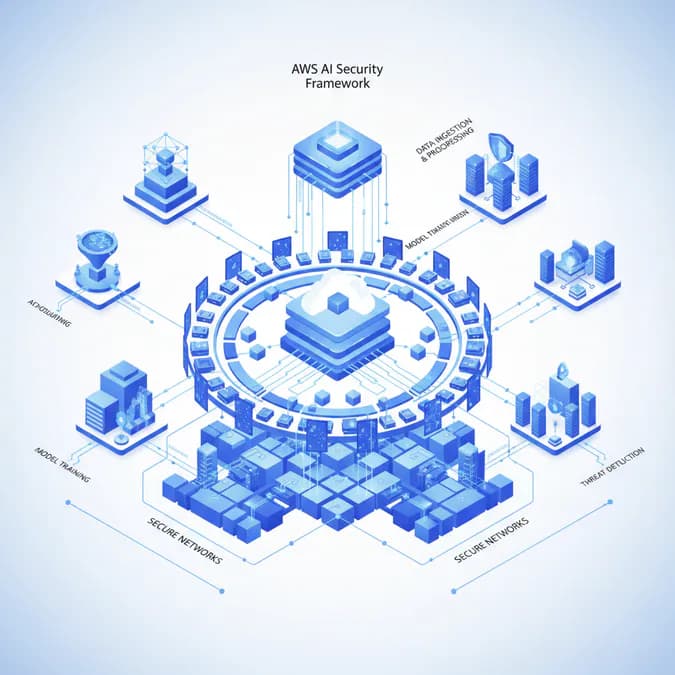
The Amazon Web Services (AWS) AI Security Framework is a structured approach to securing AI workloads throughout their lifecycle. It addresses the unique security challenges posed by AI technologies, such as generative AI and autonomous agents. The framework emphasizes integrating security from day one, starting with the protot


Framework Overview: Controls, Layers, and Phases
The AWS AI Security Framework is built on three key elements:
- Controls: The framework outlines specific security controls that should be implemented at each phase of the AI workload lifecycle. These controls cover various aspects, including identity and access management, data protection, and application security.
- Layers: The framework emphasizes a layered approach to security, with controls applied at the infrastructure, identity/data, and AI application layers. This layered approach ensures that a compromise at one level does not lead to complete system failure.
- Phases: The framework divides the AI workload lifecycle into three phases: prototype, production, and scaling. Each phase has its own unique security considerations and requires specific controls to be implemented.
This phased approach allows organizations to gradually implement security measures as their AI workloads mature, ensuring that security keeps pace with development. According to the AWS Security Blog, "You aren’t adding security to AI. You’re building AI on top of security."
Prototype Phase Security Considerations
The prototype phase is the initial stage of AI workload development, where the focus is on experimentation and validation. During this phase, it's crucial to establish a baseline security posture by:
- Implementing basic identity and access management controls
- Encrypting sensitive data at rest and in transit
- Monitoring system activity for suspicious behavior
Starting security at the prototype stage, rather than after deployment, is a key recommendation of the framework. This proactive approach helps identify and address potential security vulnerabilities early in the development process.
Production Phase Security Implementation
Once an AI workload moves into production, the security requirements become more stringent. In this phase, organizations should focus on:
- Strengthening identity and access management controls
- Implementing data loss prevention (DLP) measures
- Conducting regular security assessments and penetration testing
- Implementing robust monitoring and logging
According to AWS Security Blog, "Implement defense-in-depth with security controls at multiple levels—network, application, agent, and data layers—to safeguard that compromise at one level doesn’t lead to complete system failure." This highlights the importance of a layered security approach in the production phase.
Scaling Phase Security Management
As AI workloads scale, the security challenges become even more complex. In this phase, organizations need to ensure that their security controls can handle the increased load and complexity. This includes:
- Automating security processes
- Implementing continuous monitoring and threat detection
- Scaling security infrastructure to meet demand
- Regularly reviewing and updating security policies and procedures
Continuous monitoring for agent behavior and AI application activity is crucial as part of defense-in-depth and incident response. AWS recommends 24/7 monitoring to ensure that any security incidents are detected and addressed promptly.
Layered Security Architecture Approach
The AWS AI Security Framework emphasizes a layered security architecture, with controls implemented at multiple levels:
- Infrastructure Security: Protecting the underlying infrastructure that supports AI workloads, including compute, storage, and networking resources.
- Identity and Data Security: Managing access to AI workloads and protecting sensitive data used by AI models.
- AI Application Security: Securing the AI applications themselves, including addressing AI-specific risks like prompt injection and data leakage.
This layered approach ensures that a compromise at one level does not lead to a complete system failure. According to AWS Security Blog, "Prompt injection is a primary threat, comparable to traditional injection attacks like SQL."
SHIP Engagement Program Details
To help organizations implement the AWS AI Security Framework, AWS offers no-cost SHIP (Security, Compliance, Identity, and Governance) engagements. These engagements provide expert guidance and support to help organizations:
- Assess their current security posture
- Develop a security plan tailored to their specific needs
- Implement the recommended security controls
- Automate security processes
The SHIP engagement program is designed to lower adoption barriers and make it easier for enterprises to operationalize AI safely while meeting regulatory and internal risk requirements. This program helps organizations implement security, compliance, identity, and governance controls effectively.
Best Practices for AI Security Implementation
Implementing the AWS AI Security Framework effectively requires following several best practices:
- Start Early: Integrate security from the initial prototype phase.
- Layer Security: Implement controls at the infrastructure, identity/data, and AI application layers.
- Automate Security: Automate security processes to improve efficiency and scalability.
- Monitor Continuously: Implement continuous monitoring and threat detection.
- Stay Informed: Keep up-to-date with the latest security threats and best practices.
According to industry surveys, 90% of organizations say they need better visibility into AI use before broader rollout. Implementing these best practices can help organizations gain the necessary visibility and control over their AI workloads.
Conclusion and Next Steps
The AWS AI Security Framework provides a comprehensive and structured approach to securing AI workloads. By integrating security from day one, implementing controls at multiple layers, and following best practices, organizations can mitigate risks and ensure that their AI initiatives are secure and compliant. The no-cost SHIP engagement program further supports organizations in implementing the framework effectively.
To get started with the AWS AI Security Framework, organizations should:
- Assess their current security posture.
- Develop a security plan tailored to their specific needs.
- Implement the recommended security controls.
- Consider engaging with the AWS SHIP program for expert guidance.
By taking these steps, organizations can confidently embrace AI technologies while maintaining a strong security posture. The AWS AI Security Framework, along with resources like the AWS Generative AI Security Scoping Matrix, provides a solid foundation for securing AI workloads in today's evolving threat landscape.