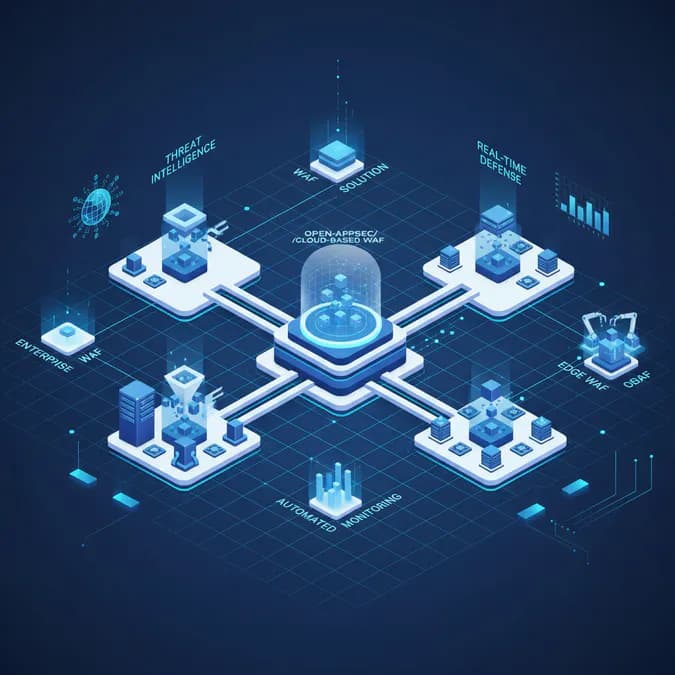
Web Application Firewalls (WAFs) are essential for protecting web applications from a wide range of cyber threats. As we move into 2026, the threat landscape continues to evolve, demanding more sophisticated WAF solutions. This article delves into a real-world comparison of leading WAF solutions, highlighting the performance of open-appsec/CloudGuard WAF and the importance of streaming analysis in modern WAF technology. We'll explore how these solutions handle emerging threats like padding evasion and zero-day attacks, providing insights to help you choose the best WAF for your organization.
Introduction to WAF Solutions in 2026
In 2026, Web Application Firewalls (WAFs) are more critical than ever for safeguarding web applications against evolving cyber threats. Modern WAFs must defend against common exploits like SQL injection and cross-site scripting (XSS), as well as sophisticated attacks like zero-day exploits and padding evasion. The rise of e-commerce and increasingly complex supply chains has made

Testing Methodology and Real-World Scenarios
The efficacy of a WAF solution hinges on its ability to accurately detect and block malicious traffic without generating excessive false positives. To evaluate WAF performance, rigorous testing methodologies are employed, simulating real-world attack scenarios. These tests often involve using datasets of real HTTP requests to assess security coverage and precision. A key metric in these evaluations is balanced accuracy, which provides a holistic view of the WAF's performance by considering both security quality and detection quality [Source: openappsec.io]. The open-appsec team emphasizes the importance of balanced accuracy for a comprehensive understanding of WAF effectiveness.
CloudGuard WAF Performance Analysis
open-appsec/CloudGuard WAF has emerged as a top performer in recent WAF efficacy tests. According to Automated Pipeline, it achieved a true positive rate of 99.56% in comparative testing. This high detection rate indicates the WAF's ability to accurately identify and block malicious requests. Furthermore, open-appsec/CloudGuard WAF demonstrated a balanced accuracy of 99.453% in Critical Profile testing, underscoring its reliability and precision [Source: openappsec.io]. Check Point's CloudGuard WAF also boasts impressive figures, with a 99.5% detection rate and a low false positive rate of 0.56% [Source: Check Point Blog].
Padding Evasion and CVE-2025-55182 Testing
One of the critical tests for modern WAFs is their ability to defend against padding evasion attacks, particularly those exploiting vulnerabilities like React2Shell (CVE-2025-55182). Padding evasion involves adding extra characters to a malicious request to bypass traditional signature-based detection mechanisms. open-appsec/CloudGuard WAF demonstrated superior performance against these types of attacks, successfully mitigating the React2Shell vulnerability [Source: openappsec.io]. Check Point CloudGuard WAF also succeeded against padded payloads in CVE-2025-55182, highlighting its robust defense capabilities [Source: Check Point Blog].
Streaming Analysis vs. Legacy Buffer-Based Approaches
A key differentiator between modern and legacy WAF solutions is their approach to analyzing HTTP traffic. Traditional WAFs often rely on buffer-based analysis, which involves buffering the entire request before inspecting it. This approach can be vulnerable to evasion techniques, especially when dealing with large or complex requests. In contrast, modern WAFs utilize streaming analysis, which allows them to inspect traffic in real-time as it flows through the system. Streaming analysis enables WAFs to detect and block malicious requests more effectively, even when they employ techniques like padding evasion. The study by open-appsec identifies streaming analysis as a critical capability gap in legacy WAF solutions [Source: openappsec.io].
Machine Learning in Modern WAF Solutions
Machine learning (ML) plays a crucial role in modern WAF solutions, enabling them to adapt to evolving threats and improve detection accuracy. ML-based WAFs can learn from historical traffic patterns to identify anomalies and detect zero-day attacks that signature-based systems might miss. Check Point CloudGuard WAF, for example, uses dual-layer ML to achieve a high detection rate with a low false positive rate [Source: Check Point Blog]. The use of machine learning outperforms traditional buffer-based detection methods, providing enhanced protection against a wider range of threats [Source: openappsec.io].
Comparative Analysis: CloudGuard vs. Cloudflare
While Cloudflare is a widely used WAF solution, it has been identified as lacking modern streaming analysis capabilities in recent comparisons [Source: openappsec.io]. Legacy WAFs like Cloudflare often default to a fail-open configuration, which can leave them vulnerable to evasion attacks. In contrast, open-appsec/CloudGuard WAF and Check Point CloudGuard WAF prioritize a prevention-first approach, leveraging streaming analysis and machine learning to provide more robust protection. The PeerSpot comparison highlights the strengths of Check Point CloudGuard WAF against open-appsec, providing insights into user preferences and market mindshare.
Key Findings and True Positive Rate Metrics
The key findings from the WAF solution comparison highlight the importance of several factors:
- True Positive Rate: open-appsec/CloudGuard WAF achieved a high true positive rate of 99.56%, indicating its ability to accurately detect malicious traffic [Source: openappsec.io].
- Balanced Accuracy: Balanced accuracy provides a more holistic view of WAF performance, considering both security and detection quality. open-appsec/CloudGuard WAF demonstrated a balanced accuracy of 99.453% in Critical Profile testing [Source: openappsec.io].
- Streaming Analysis: Modern WAFs with streaming analysis capabilities are better equipped to handle evasion techniques and complex attacks [Source: openappsec.io].
- Machine Learning: ML-based WAFs can adapt to evolving threats and improve detection accuracy, providing enhanced protection against zero-day attacks [Source: Check Point Blog].
Limitations of Legacy WAF Solutions
Legacy WAF solutions often suffer from several limitations that can compromise their effectiveness:
- Buffer-Based Analysis: Traditional WAFs rely on buffer-based analysis, which can be vulnerable to evasion techniques [Source: openappsec.io].
- Lack of Streaming Analysis: Legacy WAFs often lack streaming analysis capabilities, making them less effective against complex attacks [Source: openappsec.io].
- Signature-Based Detection: Signature-based detection methods can be easily bypassed by new and evolving threats [Source: openappsec.io].
- Fail-Open Configuration: Some legacy WAFs default to a fail-open configuration, which can leave them vulnerable to attacks [Source: openappsec.io].
Recommendations for WAF Selection in 2026
When selecting a WAF solution in 2026, consider the following recommendations:
- Prioritize Streaming Analysis: Choose a WAF that utilizes streaming analysis to effectively handle complex and evasive attacks [Source: openappsec.io].
- Look for Machine Learning Capabilities: Opt for a WAF that incorporates machine learning to adapt to evolving threats and improve detection accuracy [Source: Check Point Blog].
- Evaluate True Positive Rate and Balanced Accuracy: Assess the WAF's performance based on its true positive rate and balanced accuracy metrics [Source: openappsec.io].
- Consider Real-World Testing Results: Review the results of real-world WAF efficacy tests to understand how the solution performs in practical scenarios [Source: openappsec.io].
- Ensure Prevention-First Approach: Select a WAF that prioritizes a prevention-first approach to minimize the risk of successful attacks [Source: Check Point Blog].
In conclusion, the best WAF solutions in 2026 leverage advanced technologies like streaming analysis and machine learning to provide robust protection against evolving cyber threats. open-appsec/CloudGuard WAF and Check Point CloudGuard WAF have demonstrated strong performance in real-world testing, making them top contenders for organizations seeking to enhance their web application security posture.
Sources
- Automated Pipeline
- WAF Efficacy 2026: The Ultimate Guide to Proven Solutions
- 2026 WAF Security Test: Key Findings Revealed - Check Point Blog
- Check Point CloudGuard WAF vs open-appsec comparison - PeerSpot
- openappsec/waf-comparison-project: Testing datasets and tools
- Source: openappsec.io
- Source: sourceforge.net