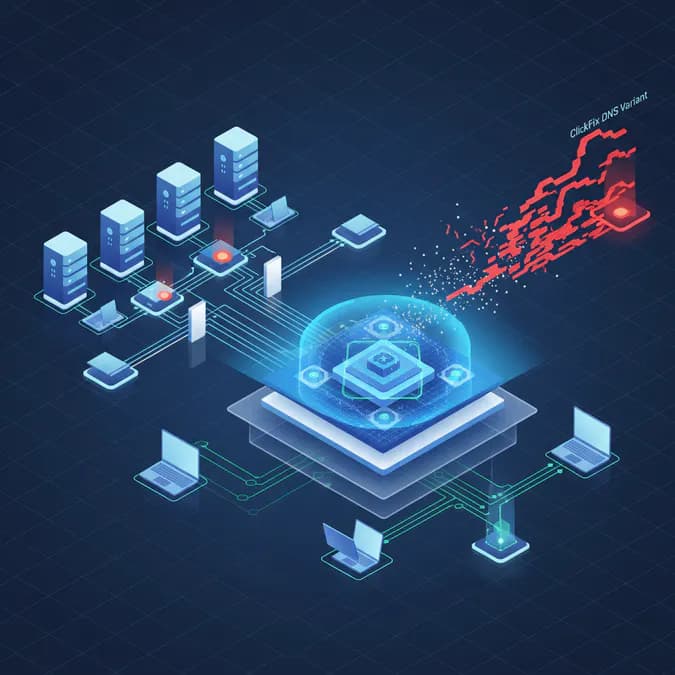
Microsoft has revealed a dangerous evolution of the ClickFix variant DNS attack, where cybercriminals manipulate DNS queries to trick users into executing malicious commands across Windows and macOS platforms. This escalating threat represents a critical shift in how attackers conduct stealer campaigns, moving beyond traditional phishing tactics to exploit user trust and system vulnerabilities.
The ClickFix variant DNS technique combines sophisticated social engineering with technical exploitation, creating a multi-layered threat that challenges traditional security defenses. Understanding this attack vector is essential for security teams tasked with protecting organizational assets and user data.
Understanding the ClickFix Variant DNS Attack Mechanism
The ClickFix variant DNS attack discovered by Microsoft represents a sophisticated advancement in social engineering tactics. Rather than relying solely on deceptive web interfaces, attackers now manipulate DNS queries to redirect users and execute malicious commands. This technique exploits the f

When users encounter fake error messages or support notifications, they are prompted to execute commands that appear legitimate. These commands, however, are designed to bypass security controls and establish persistence on infected systems. The attack chain typically begins with a convincing social engineering lure, often disguised as system alerts or software update notifications.
The DNS manipulation component of the ClickFix variant DNS attack adds a layer of sophistication that makes detection significantly more challenging for security teams. By controlling DNS responses, attackers can redirect legitimate-looking requests to malicious command servers, bypass traditional URL-based security filters, create convincing fake error messages tied to DNS resolution failures, and establish command-and-control channels that appear to originate from trusted sources.
How the ClickFix Variant DNS Attack Works: Technical Details
The technical execution of the ClickFix variant DNS attack involves several distinct phases. Initially, attackers craft convincing social engineering messages that appear to come from legitimate software vendors or system administrators. These messages typically reference common system issues or security concerns that would prompt users to take immediate action.
Once a user clicks on a malicious link or downloads a file, the ClickFix variant DNS attack initiates its DNS manipulation phase. The attacker's infrastructure intercepts or redirects DNS queries, causing the victim's system to resolve domain names to attacker-controlled servers. This allows the threat actor to serve fake error pages or legitimate-looking system dialogs that prompt command execution.
The commands executed during a ClickFix variant DNS attack are typically PowerShell scripts or command-line instructions designed to download and execute additional malware. These commands often include obfuscation techniques to evade endpoint detection and response (EDR) solutions. The malware payload typically includes stealer functionality that harvests sensitive data from the compromised system.
Security researchers have identified that the ClickFix variant DNS attack often leverages legitimate Windows utilities like PowerShell, WinRM, and Task Scheduler to establish persistence. This "living off the land" approach makes detection more difficult because the attack uses built-in system tools that are typically trusted by security controls.
Cross-Platform Threat Landscape: Windows and macOS Targeting
What makes the ClickFix variant DNS attack particularly concerning is its ability to target both Windows and macOS environments. Security teams have historically focused on Windows-based threats, but the expansion to macOS indicates attackers are broadening their targeting strategies. This dual-platform approach allows threat actors to maximize their potential victim pool and adapt to organizations with mixed operating system deployments.
The macOS variant of the ClickFix variant DNS attack uses similar social engineering tactics but tailors the technical payload to exploit macOS-specific vulnerabilities and system behaviors. macOS users may be particularly vulnerable because they often have lower security awareness regarding malware threats, having historically experienced fewer targeted campaigns compared to Windows users.
The stealer functionality embedded in ClickFix variant DNS campaigns enables attackers to harvest sensitive data including:
- User credentials and authentication tokens
- Browser stored passwords and autofill data
- System configuration and hardware information
- Email and messaging application data
- Cryptocurrency wallet information
- SSH keys and development credentials
This stolen data can be leveraged for further attacks, sold on underground markets, or used for identity theft and fraud. Organizations with mixed operating system environments face compounded risk because attackers can compromise both Windows and macOS systems within the same organization, potentially gaining access to critical infrastructure and sensitive information.
Identifying ClickFix Variant DNS Attack Indicators
Security teams can identify potential ClickFix variant DNS attack activity by monitoring for specific indicators of compromise. Unusual DNS query patterns, particularly queries to newly registered domains or domains with suspicious naming conventions, may indicate ClickFix variant DNS attack activity. Unexpected PowerShell execution, especially when initiated from unusual parent processes or with suspicious command-line arguments, is a strong indicator of compromise.
Network traffic analysis can reveal command-and-control communications associated with ClickFix variant DNS attacks. Attackers typically use encrypted channels to communicate with compromised systems, but the connection patterns and timing may reveal malicious activity. Endpoint monitoring should track process creation events, file modifications, and registry changes associated with the ClickFix variant DNS attack.
User reports of unexpected system dialogs or error messages should be investigated immediately. The ClickFix variant DNS attack relies on social engineering, so legitimate user reports often provide the earliest warning signs of active campaigns. Organizations should establish clear reporting procedures and ensure users feel comfortable reporting suspicious activity without fear of punishment.
Organizational Defense Strategy Against ClickFix Variant DNS Attacks
Security teams must implement multi-layered defenses to combat the ClickFix variant DNS attack threat. User education remains critical—employees need training to recognize social engineering tactics and understand why they should never execute commands from untrusted sources. Organizations should establish clear policies prohibiting command execution from external prompts without proper verification.
Network-level protections are equally important for defending against ClickFix variant DNS attacks. DNS filtering and monitoring can help detect suspicious DNS queries associated with ClickFix campaigns. Endpoint detection and response (EDR) solutions should be configured to alert on suspicious command execution patterns, particularly PowerShell and command-line activities initiated from unusual sources.
Key defensive measures against ClickFix variant DNS attacks include:
- Implement DNS filtering to block known malicious domains
- Deploy EDR solutions with behavioral analysis capabilities
- Maintain updated security patches across all systems
- Enforce multi-factor authentication (MFA) on critical systems
- Conduct regular security awareness training for all employees
- Monitor for suspicious command execution patterns
- Implement network segmentation to limit lateral movement
- Establish incident response procedures specific to ClickFix attacks
DNS security should be a primary focus when defending against ClickFix variant DNS attacks. Organizations should implement DNS query logging and analysis to identify suspicious resolution patterns. DNS filtering solutions can block known malicious domains associated with ClickFix campaigns, preventing users from accessing attacker-controlled infrastructure. Some advanced DNS security solutions can detect DNS tunneling and other evasion techniques used in ClickFix variant DNS attacks.
Advanced Detection Techniques for ClickFix Variant DNS Threats
Behavioral analysis is essential for detecting ClickFix variant DNS attack activity that may evade signature-based detection. EDR solutions should monitor for suspicious process execution chains, unusual file modifications, and unexpected network connections. Machine learning-based detection systems can identify anomalous behavior patterns associated with ClickFix variant DNS attacks.
Network segmentation can limit the impact of successful ClickFix variant DNS attacks by restricting lateral movement within the network. Critical systems should be isolated from general user workstations, preventing attackers from pivoting to sensitive infrastructure after compromising a single endpoint.
Incident response procedures should specifically address ClickFix variant DNS attack scenarios. Security teams should practice detection, containment, and remediation procedures to ensure rapid response when ClickFix variant DNS attack activity is identified. Threat intelligence sharing with industry peers can provide early warning of new ClickFix variant DNS attack campaigns.
The Broader Implications of ClickFix Variant DNS Evolution
The emergence of ClickFix variant DNS attacks demonstrates how threat actors continuously evolve their techniques to evade detection and increase success rates. This escalation underscores the importance of maintaining vigilant security postures and staying informed about emerging threats. The combination of social engineering with DNS manipulation represents a significant advancement in attack sophistication.
Microsoft's disclosure of the ClickFix variant DNS attack provides valuable intelligence for the security community. Organizations should review their incident response procedures and ensure they have the capability to detect and respond to ClickFix-related incidents quickly. Threat intelligence sharing within industry groups can help organizations understand the specific indicators of compromise associated with these campaigns.
The ClickFix variant DNS attack represents a significant evolution in social engineering attacks, combining traditional manipulation tactics with sophisticated technical exploitation. By understanding how these attacks work and implementing comprehensive defensive strategies, organizations can significantly reduce their risk of falling victim to these campaigns.
Key Takeaways: Protecting Against ClickFix Variant DNS Attacks
- The ClickFix variant DNS attack uses DNS manipulation combined with social engineering to trick users into executing malicious commands
- Both Windows and macOS systems are targeted, requiring comprehensive cross-platform security strategies
- DNS filtering, EDR solutions, and user education are essential defensive measures
- Behavioral analysis and threat intelligence sharing improve detection capabilities
- Rapid incident response procedures are critical for minimizing damage from successful attacks
- Organizations should implement multi-layered defenses combining technical controls with user awareness training
Frequently Asked Questions About ClickFix Variant DNS Attacks
What is the primary attack vector for ClickFix variant DNS campaigns?
The ClickFix variant DNS attack primarily uses social engineering to trick users into executing malicious commands. Attackers create fake error messages or support notifications that appear legitimate, prompting users to run commands that establish malware infections. DNS manipulation enhances the attack by redirecting users to attacker-controlled infrastructure and making fake error messages more convincing.
How can organizations detect ClickFix variant DNS attack activity?
Organizations can detect ClickFix variant DNS attacks by monitoring DNS query patterns for suspicious domains, tracking PowerShell and command-line execution from unusual sources, analyzing network traffic for command-and-control communications, and investigating user reports of unexpected system dialogs. EDR solutions with behavioral analysis capabilities are particularly effective at identifying ClickFix variant DNS attack activity that may evade signature-based detection.
What data do attackers steal in ClickFix variant DNS campaigns?
The ClickFix variant DNS attack stealer functionality targets credentials, browser passwords, system information, email data, cryptocurrency wallets, and development credentials. This stolen information can be used for further attacks, sold on underground markets, or leveraged for identity theft and fraud.
Why is the ClickFix variant DNS attack particularly dangerous for macOS users?
The ClickFix variant DNS attack targeting macOS is particularly dangerous because macOS users often have lower security awareness regarding malware threats. Additionally, macOS systems may have fewer security controls deployed compared to Windows systems, making them more vulnerable to successful exploitation.
What should organizations do if they suspect a ClickFix variant DNS attack?
If organizations suspect ClickFix variant DNS attack activity, they should immediately isolate affected systems from the network, conduct forensic analysis to determine the scope of compromise, review logs for indicators of lateral movement, reset credentials for affected users, and notify relevant stakeholders. Threat intelligence should be shared with industry peers and law enforcement when appropriate.