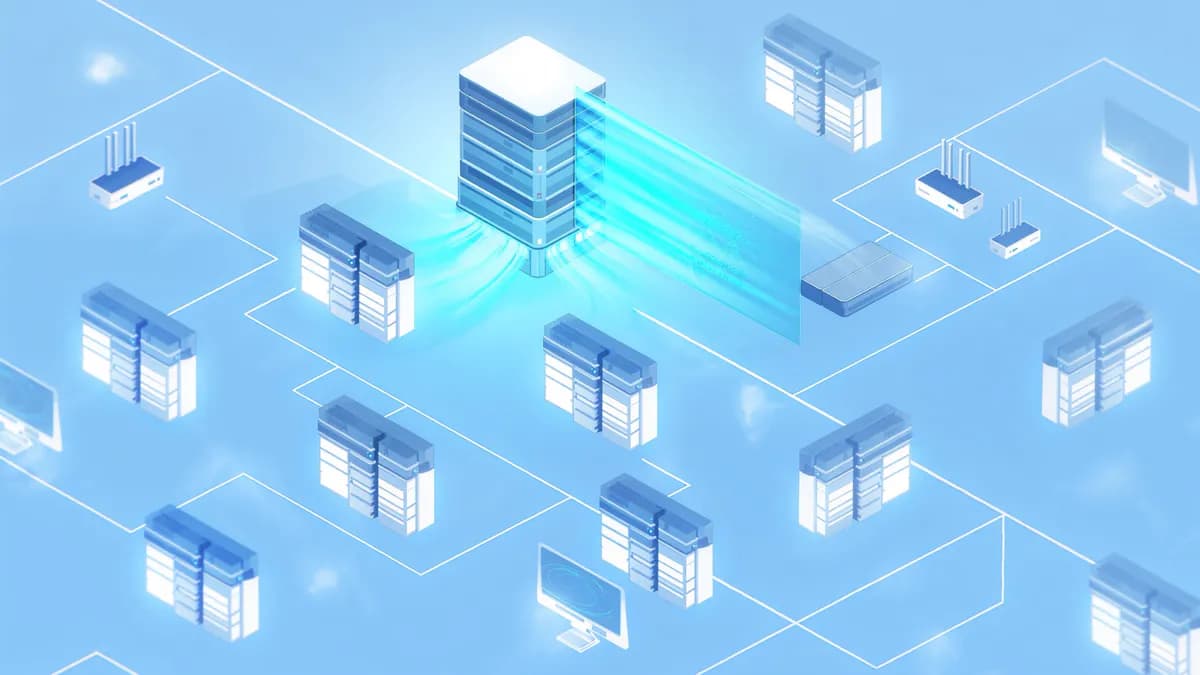
As cloud adoption accelerates across enterprises, organizations face a critical paradox: cloud environments unlock innovation and agility, yet they simultaneously introduce complex new security risks. The solution lies in establishing a comprehensive cloud security architecture—a structured blueprint that enables CISOs to secure cloud deployments while supporting business velocity.
Recent data underscores the urgency. According to the Cloud Security Alliance 2025 report, 94% of organizations experienced cloud security incidents in the past 12 months, primarily due to misconfigurations or unauthorized access. Meanwhile, Gartner's 2026 Cloud Security Survey reveals an 80% increase in multi-cloud adoption among enterprises since 2023, amplifying security complexity. The Ponemon Institute's 2025 Study found that 67% of CISOs report cloud misconfigurations as their top challenge.
These statistics highlight why cloud security architecture has become essential. Unlike traditional on-premises security models, cloud environments operate under a shared responsibility model where cloud service providers secure infrastructure while customers must protect data, applications, and access controls. This division of duties requires a fundamentally different architectural approach.
This comprehensive guide explores how CISOs can design and implement effective cloud security architectures that transform security from a barrier into a business enabler.
Understanding Cloud Security Architecture
Cloud security architecture is a structured framework that defines how organizations protect their cloud environments while maintaining compliance and supporting business objectives. It serves as a blueprint for integrating security controls across Infrastructure as a Service (IaaS), Platform as a Service (PaaS), and Software as a Service (SaaS) deployments

The foundation of modern cloud security architecture rests on understanding the shared responsibility model. As BigID, a leading cloud security specialist, explains: "A shared responsibility model balances security responsibilities between the cloud service provider and the customer." This division means cloud providers handle physical infrastructure, virtualization, and underlying platform security, while organizations must secure their data, applications, identity and access management, and network configurations.
This architectural approach differs significantly from legacy on-premises security models. Traditional environments placed full security responsibility on the organization, with clear perimeter-based defenses. Cloud environments, particularly multi-cloud setups, eliminate traditional network perimeters and require security controls distributed across multiple providers and deployment models.
Effective cloud security architecture addresses three core pillars:
- Confidentiality: Ensuring only authorized users access data
- Integrity: Protecting data from unauthorized modification
- Availability: Ensuring services remain accessible
Beyond these foundational elements, the architecture must encompass network security, identity management, data protection, compliance mapping, and incident response capabilities.
Key Components of a Robust Cloud Security Architecture
A comprehensive cloud security architecture incorporates multiple interconnected components that work together to create a resilient security posture.
Risk Assessment and Data Classification
The first component involves conducting thorough risk assessments specific to cloud environments. Organizations must identify assets, threats, and vulnerabilities unique to their cloud deployments. This includes evaluating misconfigurations—a leading cause of breaches—and assessing the security posture of each cloud service provider.
Data classification forms the second critical element. Organizations must categorize data by sensitivity level and regulatory requirements, then map appropriate security controls to each classification. This ensures resources focus on protecting the most critical assets.
Zero Trust Network Architecture (ZTNA)
Zero trust principles have become foundational to modern cloud security architecture. Rather than trusting anything inside a network perimeter, zero trust assumes breach and requires continuous verification of every user, device, and application attempting to access resources.
Zero trust architecture in cloud environments involves:
- Implementing strict identity and access management (IAM) controls
- Requiring multi-factor authentication (MFA) for all access
- Continuously monitoring and validating user behavior
- Applying least-privilege access principles
- Encrypting all data in transit and at rest
This approach proves particularly valuable in multi-cloud environments where traditional perimeter-based security fails.
Network Segmentation and Microsegmentation
Network segmentation divides cloud infrastructure into isolated zones, limiting lateral movement if a breach occurs. Microsegmentation takes this further, creating granular security zones around individual applications or workloads.
In cloud environments, this involves:
- Implementing virtual private clouds (VPCs) and subnets
- Configuring security groups and network access control lists
- Deploying Web Application Firewalls (WAFs) for application-layer protection
- Establishing secure communication channels between cloud resources
Compliance and Governance Frameworks
Cloud security architecture must align with regulatory requirements specific to the organization's industry and geography. This includes frameworks like GDPR for European data protection, HIPAA for healthcare, and PCI-DSS for payment processing.
SABSA (Sherwood Applied Business Security Architecture) provides a layered blueprint approach that aligns security architecture with business requirements. This framework helps organizations move from abstract business goals to concrete technical controls, ensuring CISOs, CIOs, and CTOs work toward aligned objectives.
As IANS Research notes: "Security architecture can help distill highly technical concepts into tested, repeatable patterns and scalable approaches that help the CIO and CTO organizations align with CISO concerns."
Identity and Access Management (IAM)
IAM represents a critical component often overlooked in cloud deployments. Cloud environments require sophisticated IAM solutions that manage:
- User provisioning and deprovisioning
- Role-based access control (RBAC)
- Privileged access management (PAM)
- Single sign-on (SSO) across multiple cloud providers
- Continuous access reviews and recertification
Encryption and Data Protection
Encryption must be implemented at multiple levels:
- Data at rest: Encrypting stored data in cloud databases and storage services
- Data in transit: Protecting data moving between cloud services and user endpoints
- Data in use: Protecting data during processing and computation
- Key management: Implementing robust key generation, storage, and rotation procedures
Challenges in Implementing Cloud Security Architecture
While the benefits of cloud security architecture are clear, CISOs face significant implementation challenges.
Multi-Cloud Complexity
The 80% increase in multi-cloud adoption since 2023 creates unprecedented complexity. Organizations using multiple cloud providers must implement consistent security policies across different platforms with varying security models, APIs, and management interfaces. This fragmentation makes it difficult to maintain visibility and enforce uniform security standards.
Misconfiguration Risks
With 67% of CISOs identifying cloud misconfigurations as their top challenge, this remains the most pressing concern. Misconfigurations often result from:
- Inadequate security training for development teams
- Rapid deployment cycles that prioritize speed over security
- Complex configuration options with insecure defaults
- Lack of automated configuration management
- Insufficient monitoring and auditing of configuration changes
Organizational Alignment
CISOs often struggle to align security architecture with business objectives. Development teams prioritize velocity, infrastructure teams focus on operational efficiency, and security teams emphasize risk mitigation. These competing priorities can lead to security being perceived as a barrier rather than an enabler.
SANS Institute experts articulate this challenge: "Today's CISOs are trapped in a false choice: slow business velocity with manual legacy firewalls, or risk a 'security illusion' with ineffective cloud-native tools."
Legacy Tool Limitations
Many organizations attempt to extend traditional on-premises security tools to cloud environments. These legacy solutions often lack cloud-native capabilities, creating gaps in visibility and control. Modern cloud security requires tools designed specifically for cloud architectures.
Best Practices for CISOs in Cloud Security Architecture
Successful cloud security architecture implementation requires following established best practices.
1. Conduct Comprehensive Risk Assessments
Begin with thorough risk assessments specific to cloud environments. Evaluate each cloud service provider's security posture, identify potential misconfigurations, and assess the organization's ability to manage shared responsibility requirements. This foundational step ensures that subsequent architectural decisions address the organization's specific risk profile and threat landscape.
2. Implement Zero Trust Principles
Move beyond perimeter-based security to zero trust architecture. This involves implementing strong identity verification, continuous monitoring, and least-privilege access across all cloud resources. Zero trust proves particularly effective in multi-cloud environments where traditional network perimeters no longer apply.
3. Establish Clear Governance Frameworks
Implement governance frameworks like SABSA that align security architecture with business requirements. This ensures security decisions support organizational objectives rather than creating friction. Clear governance also facilitates communication between security, development, and infrastructure teams.
4. Automate Security Controls
Manual security processes cannot scale in cloud environments. Implement automation for:
- Configuration management and compliance checking
- Vulnerability scanning and remediation
- Access provisioning and deprovisioning
- Threat detection and response
- Compliance reporting and audit trails
5. Invest in Cloud-Native Security Tools
Replace or supplement legacy security tools with cloud-native solutions designed for modern architectures. These tools provide better visibility, control, and integration with cloud platforms. Cloud-native tools also reduce operational overhead and improve detection accuracy.
6. Prioritize Data Classification and Protection
Implement robust data classification schemes and map appropriate protection controls to each classification level. This ensures resources focus on protecting the most critical assets and helps organizations comply with regulatory requirements.
7. Establish Incident Response Procedures
Develop cloud-specific incident response procedures that account for the shared responsibility model and multi-cloud complexity. Include clear escalation paths, communication protocols, and recovery procedures. Regular testing and updates ensure procedures remain effective as threats evolve.
8. Foster Cross-Functional Collaboration
Build strong relationships between security, development, and infrastructure teams. Regular communication and shared objectives help align security with business velocity. This collaboration transforms security from a barrier into an enabler of innovation.
The Future of Cloud Security Architecture
Cloud security architecture continues to evolve as organizations face new challenges and opportunities.
AI-Driven Security
Recent developments highlight the integration of artificial intelligence into cloud security architectures. SANS Institute's Multicloud Blueprint for the AI Era addresses how CISOs can integrate AI-driven security capabilities into multi-cloud environments, moving beyond limitations of legacy tools. AI-powered solutions can detect anomalies, automate threat response, and improve security decision-making at scale.
Increased Focus on Resilience
Beyond traditional security measures, organizations increasingly emphasize cyber resilience—the ability to detect, respond to, and recover from security incidents. This represents a maturation of cloud security thinking from prevention-focused to resilience-focused approaches. SentinelOne and other security leaders emphasize that resilience should be a core component of cloud security architecture.
Standardization and Best Practices
As cloud adoption matures, industry standards and best practices continue to emerge. Organizations like the Cloud Security Alliance publish incident reports and guidance that help CISOs understand emerging threats and implement effective countermeasures. These resources provide valuable insights into what works in real-world cloud environments.
Evolution of Shared Responsibility Models
As cloud services become more sophisticated, the shared responsibility model continues to evolve. CISOs must stay informed about how their cloud providers' responsibilities change with new services and features, and adjust their architectural approach accordingly.
Key Takeaways
Cloud security architecture has evolved from a nice-to-have consideration to an essential component of enterprise cloud strategy. With 94% of organizations experiencing cloud security incidents and 67% of CISOs struggling with misconfigurations, the need for structured architectural approaches is undeniable.
Effective cloud security architecture balances multiple competing demands: supporting business velocity while managing risk, maintaining consistency across multi-cloud environments while respecting provider differences, and implementing sophisticated controls without creating operational friction.
CISOs who invest in comprehensive cloud security architecture—grounded in zero trust principles, governed by frameworks like SABSA, and supported by cloud-native tools—position their organizations to innovate securely. This architectural approach transforms security from a barrier into an enabler, supporting organizational resilience in an increasingly complex threat landscape.
The path forward requires commitment to continuous assessment, automation, cross-functional collaboration, and alignment with business objectives. Organizations that embrace these principles will find that cloud security architecture becomes not just a technical requirement, but a strategic advantage in an era where cloud innovation drives competitive differentiation.
Frequently Asked Questions
What is cloud security architecture?
Cloud security architecture is a structured framework that defines how organizations protect their cloud environments while maintaining compliance and supporting business objectives.
Why is cloud security architecture important?
It is essential for managing the security risks associated with cloud environments, particularly as organizations increasingly adopt multi-cloud strategies.
What are the key components of cloud security architecture?
Key components include risk assessment, data classification, zero trust principles, network segmentation, compliance frameworks, identity and access management, and encryption.
How can organizations implement effective cloud security architecture?
Organizations can implement effective cloud security architecture by conducting risk assessments, adopting zero trust principles, establishing clear governance frameworks, automating security controls, and investing in cloud-native security tools.
What challenges do CISOs face in cloud security architecture?
CISOs face challenges such as multi-cloud complexity, misconfiguration risks, organizational alignment, and limitations of legacy tools.
Sources
- Automated Pipeline
- A CISO's Guide to Cloud Security Architecture
- Enterprise Security Architecture Best Practices
- The Multicloud Blueprint: Architecting Security for the AI Era
- Enterprise Security Architecture Models | A CISSP Guide
- Mastering Endpoint Security | A CISO's Blueprint for Resilience
- Source: absolute.com
- Source: youtube.com