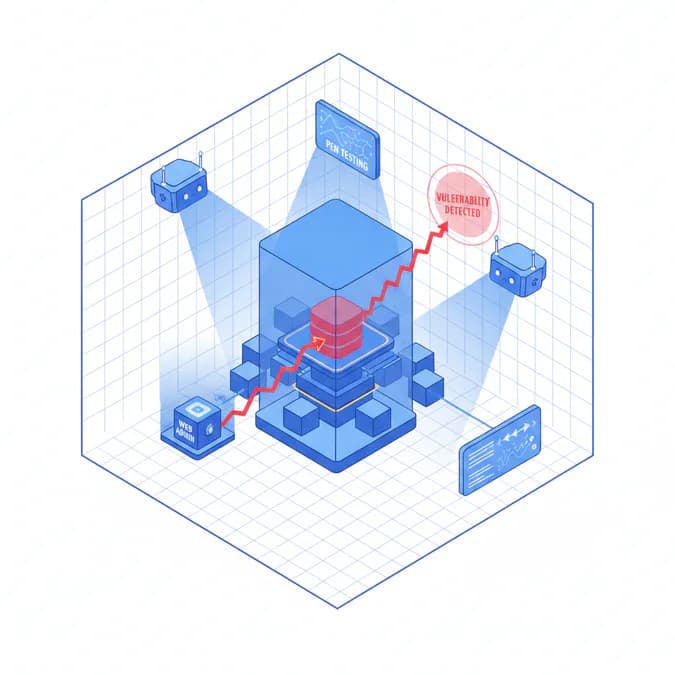
The cybersecurity landscape is constantly evolving, with new vulnerabilities emerging regularly. One such vulnerability, designated CVE-2026-2399, poses a significant threat to systems utilizing a vulnerable Web Admin interface. This article delves into the details of this path traversal vulnerability, exploring its potential impact, identifying affected versions, and outlining effective mitigation strategies. Understanding and addressing CVE-2026-2399 is crucial for maintaining the security and integrity of your web applications and infrastructure.
Understanding Path Traversal Vulnerabilities

Before diving into the specifics of CVE-2026-2399, it's essential to understand the underlying concept of path traversal vulnerabilities. A path traversal vulnerability, also known as directory traversal, occurs when an application allows users to access files or directories outside of the intended root directory on the server. This can happen when user-supplied input is used to construct file paths without proper sanitization or validation.
Attackers can exploit path traversal vulnerabilities by manipulating the input to include special characters, such as "../" (dot-dot-slash), which allows them to navigate up the directory structure and access sensitive files or execute arbitrary code on the server. The consequences of a successful path traversal attack can be severe, including:
- Data Breach: Access to sensitive configuration files, user data, or other confidential information.
- System Compromise: Execution of arbitrary code, leading to complete system takeover.
- Denial of Service: Modification or deletion of critical system files, rendering the system unusable.
CVE-2026-2399: A Deep Dive
CVE-2026-2399 specifically targets a Web Admin interface, a common component in many web applications and systems. The vulnerability allows an attacker to bypass security restrictions and access unauthorized files or directories on the server. The root cause of the vulnerability lies in the improper handling of user-supplied input when constructing file paths within the Web A

Impact of CVE-2026-2399
The impact of CVE-2026-2399 can be significant, depending on the privileges associated with the Web Admin interface and the sensitivity of the data stored on the server. Potential consequences include:
- Unauthorized Access to Administrative Functions: Attackers could gain access to administrative functions, allowing them to modify system settings, create or delete user accounts, or install malicious software.
- Exposure of Sensitive Data: Access to configuration files, logs, or other sensitive data stored on the server.
- Complete System Compromise: In some cases, attackers could leverage the vulnerability to execute arbitrary code on the server, leading to complete system compromise.
Affected Versions of Web Admin
Identifying the affected versions of the Web Admin interface is crucial for determining whether your systems are vulnerable. While the specific versions affected by CVE-2026-2399 may vary depending on the vendor and product, it's generally recommended to check the vendor's security advisories or vulnerability databases for a comprehensive list of affected versions. Keep in mind that older, unsupported versions of the Web Admin interface are more likely to be vulnerable.
Mitigation Strategies for CVE-2026-2399
Several mitigation strategies can be implemented to protect against CVE-2026-2399 and other path traversal vulnerabilities. These strategies include:
- Input Validation and Sanitization: Implement strict input validation and sanitization to ensure that user-supplied input is properly validated and sanitized before being used to construct file paths. This includes filtering out special characters, such as "../", and ensuring that the input conforms to the expected format.
- Principle of Least Privilege: Grant users only the minimum privileges necessary to perform their tasks. This reduces the potential impact of a successful path traversal attack by limiting the attacker's access to sensitive files and directories.
- Web Application Firewall (WAF): Deploy a Web Application Firewall (WAF) to detect and block path traversal attacks. A WAF can analyze incoming HTTP requests and identify malicious patterns, such as the use of "../" sequences, and block the requests before they reach the server.
- Regular Security Audits and Penetration Testing: Conduct regular security audits and penetration testing to identify and address vulnerabilities in your web applications and infrastructure. This includes testing for path traversal vulnerabilities and other common web application security flaws.
- Keep Software Up-to-Date: Regularly update your software, including the Web Admin interface and any underlying libraries or frameworks, to the latest versions. Software updates often include security patches that address known vulnerabilities.
- Use a Chroot Jail: A chroot jail restricts a process's access to only a specific directory tree. This can limit the damage an attacker can do if they successfully exploit a path traversal vulnerability.
Key Takeaways
CVE-2026-2399 highlights the importance of secure coding practices and proactive security measures. By understanding the nature of path traversal vulnerabilities and implementing appropriate mitigation strategies, organizations can significantly reduce their risk of exploitation. Regular security audits, penetration testing, and keeping software up-to-date are essential components of a comprehensive security program.
The Bottom Line
Addressing CVE-2026-2399 and similar vulnerabilities requires a multi-layered approach that includes input validation, the principle of least privilege, WAF deployment, and regular security assessments. By prioritizing security and implementing these best practices, organizations can protect their web applications and infrastructure from path traversal attacks and other security threats.
Frequently Asked Questions (FAQ)
What is CVE-2026-2399?
CVE-2026-2399 is a path traversal vulnerability affecting Web Admin interfaces, allowing unauthorized access to sensitive files.
How can I mitigate CVE-2026-2399?
Mitigation strategies include input validation, using a Web Application Firewall, and regular security audits.
Why is path traversal a concern?
Path traversal vulnerabilities can lead to data breaches, system compromise, and denial of service, making them critical to address.
Table of Contents
- Understanding Path Traversal Vulnerabilities
- CVE-2026-2399: A Deep Dive
- Impact of CVE-2026-2399
- Affected Versions of Web Admin
- Mitigation Strategies for CVE-2026-2399
- Key Takeaways
- The Bottom Line
- Frequently Asked Questions (FAQ)
For further reading, consider checking out resources from CISA and OWASP for best practices in web application security.