The Looming Threat of Cyber Warfare
As the Iran conflict intensifies, the potential for cyber warfare has become a pressing concern for leaders in the business world. The integration of artificial intelligence in cyber operations presents a new frontier in warfare, where adversaries can leverage technology to disrupt critical systems and infrastructure. Fortune 500 CEOs are particularly vulnera
The Iran War and its Impact on Global Cybersecurity
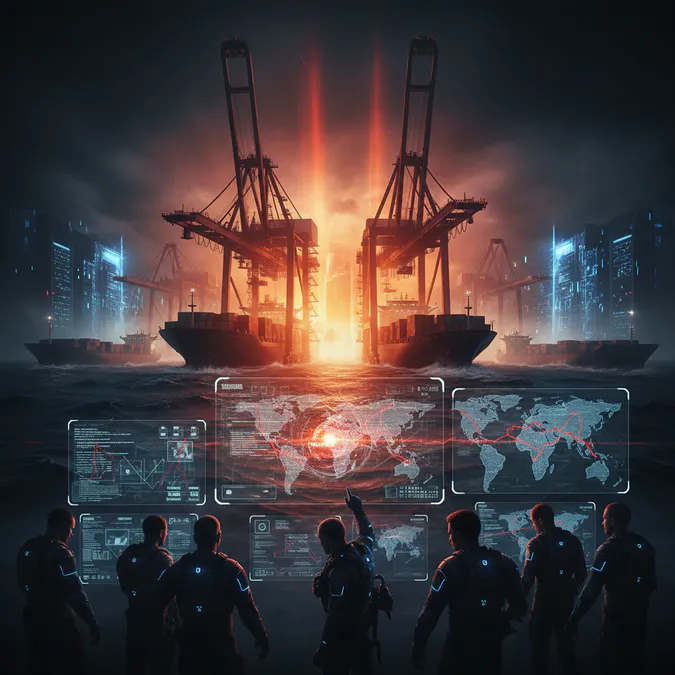
The Iran conflict has escalated significantly since late February 2026, following U.S.-Israeli strikes that have led to severe disruptions in global shipping. The Strait of Hormuz, a vital maritime chokepoint that facilitates 11% of global maritime trade, has seen a staggering drop in vessel traffic—from 138 ships per day to just 2. This disruption not only affects shipping but also raises concerns about the cybersecurity of companies operating in these regions.
- Key Statistics:
- 11% of global maritime trade volume is facilitated through the Strait of Hormuz, according to UNCTAD.
- A 70% drop in vessel traffic occurred within hours of the strikes, impacting 10% of the world's container fleet.
The Iranian Revolutionary Guard's warnings have led to a near-total halt in vessel traffic, which has compounded existing issues in the Red Sea due to Houthi threats. The implications for Fortune 500 companies are dire, as these disruptions threaten not only transportation but also the stability of supply chains and cybersecurity frameworks.
Disruption of Transportation Hubs and Shipping Routes
The ongoing conflict has forced major shipping carriers, including A.P. Moller - Maersk, MSC, and Hapag-Lloyd, to suspend bookings to the Gulf region and reroute vessels via Africa. This shift has introduced surcharges and altered the dynamics of the 2026 ocean freight market, favoring carriers over shippers.
- Key Developments:
- Major carriers have suspended operations and rerouted vessels due to risks in the Strait of Hormuz.
- Disruptions are expected to last at least six months, even if the conflict were to cease immediately.
The ramifications of these disruptions extend beyond logistics; they pose significant cybersecurity risks as companies scramble to adapt to new routes and operational challenges. The increased pressure on global shipping routes can lead to vulnerabilities that cyber adversaries may exploit.
Cyber Attacks on Private Companies: A Growing Trend
The targeting of private companies by cyber adversaries is a growing trend, particularly in the context of geopolitical conflicts. The Iran war has heightened this risk, as adversaries may seek to leverage cyber capabilities to disrupt operations and instill fear. Fortune 500 companies, which often hold sensitive data and operate critical infrastructure, are prime targets for such attacks.
- Recent Trends:
- Cyber activity targeting private companies has surged, with adversaries employing sophisticated tactics to breach defenses.
- The potential for AI-enhanced cyber warfare raises the stakes, as attackers can automate and scale their operations.
The implications for cybersecurity are profound, as companies must not only defend against traditional threats but also prepare for advanced, AI-driven cyber operations that could compromise their systems and data.
The Role of AI in Cyber Warfare
Artificial intelligence is transforming the landscape of cyber warfare, enabling adversaries to conduct operations with unprecedented speed and efficiency. AI can be used to automate attacks, analyze vulnerabilities, and even execute sophisticated phishing schemes. As the Iran conflict illustrates, the integration of AI into cyber operations poses a significant threat to Fortune 500 companies.
- Key Insights:
- AI can enhance the capabilities of cyber adversaries, allowing them to exploit vulnerabilities faster than traditional methods.
- Companies must invest in AI-driven cybersecurity solutions to stay ahead of evolving threats.
The potential for AI to disrupt critical infrastructure and private sector operations underscores the urgency for companies to adopt robust cybersecurity measures that can withstand sophisticated attacks.
Expert Opinions on the Cybersecurity Landscape
Industry experts emphasize the need for Fortune 500 companies to reassess their cybersecurity strategies in light of the evolving threat landscape. Lars Jensen, CEO of Vespucci Maritime, notes, "So realistically, we are probably looking at at least six months into the future before anybody’s going to start contemplating doing this again, and that is if we stop the Iranian war basically today". This perspective highlights the long-term implications of the current conflict on global trade and cybersecurity.
- Expert Takeaways:
- Companies must prepare for prolonged disruptions and invest in cybersecurity measures that can adapt to changing threats.
- The 2026 ocean market outlook suggests that route deviations will continue, necessitating a reevaluation of supply chain strategies.
Strategies for Fortune 500 Companies to Mitigate Cyber Risks
To navigate the new era of cyber threats, Fortune 500 companies must adopt comprehensive strategies that address both operational and cybersecurity challenges. Here are some actionable steps:
- Conduct Regular Risk Assessments:
Evaluate vulnerabilities in infrastructure and supply chains to identify potential cyber threats.
- Invest in AI-Driven Cybersecurity Solutions:
Leverage AI technologies to enhance threat detection and response capabilities.
- Enhance Employee Training:
Provide ongoing training to employees on cybersecurity best practices and phishing awareness.
- Develop Incident Response Plans:
Create and regularly update incident response plans to ensure quick recovery from cyber incidents.
- Collaborate with Industry Partners:
Engage with other companies and cybersecurity experts to share insights and best practices.
By implementing these strategies, Fortune 500 companies can better position themselves to withstand the evolving threats posed by cyber adversaries in the context of geopolitical conflicts.
Conclusion: Navigating the New Era of Cyber Threats
The ongoing Iran conflict serves as a stark reminder of the vulnerabilities faced by Fortune 500 companies in today’s interconnected world. As cyber warfare becomes an increasingly prominent threat, companies must prioritize cybersecurity and adapt their strategies to mitigate risks. By investing in advanced technologies and fostering a culture of cybersecurity awareness, organizations can navigate the complexities of the modern threat landscape and safeguard their operations against potential disruptions. The time to act is now, as the stakes have never been higher in the realm of cybersecurity.
Key Takeaways
- Cyber warfare is a growing threat that Fortune 500 companies must address.
- AI is transforming cyber operations, increasing the need for advanced cybersecurity measures.
- Companies should conduct regular risk assessments and invest in AI-driven solutions.
- Employee training and incident response plans are crucial for effective cybersecurity.
- Collaboration with industry partners can enhance overall security strategies.
FAQ
What is cyber warfare?
Cyber warfare refers to the use of digital attacks by one nation to disrupt the vital computer systems of another nation, often in the context of military conflict.
How does the Iran conflict impact cybersecurity?
The Iran conflict has escalated cyber threats against companies, particularly those in critical infrastructure sectors, increasing the risk of cyber attacks.
What can companies do to protect themselves from cyber warfare?
Companies can enhance their cybersecurity by investing in advanced technologies, conducting regular risk assessments, and training employees on best practices.
Sources
- Automated Pipeline
- How the Iran conflict is impacting global ocean shipping flows
- Iran conflict threatens key shipping routes in the Middle East
- Global Shipping Disruption: How the Iran Conflict Is Reshaping Routes
- How the Iran Conflict Is Rippling Across Global Supply Chains
- Iran Conflict Sends Shockwaves Through Global Shipping, Air Freight