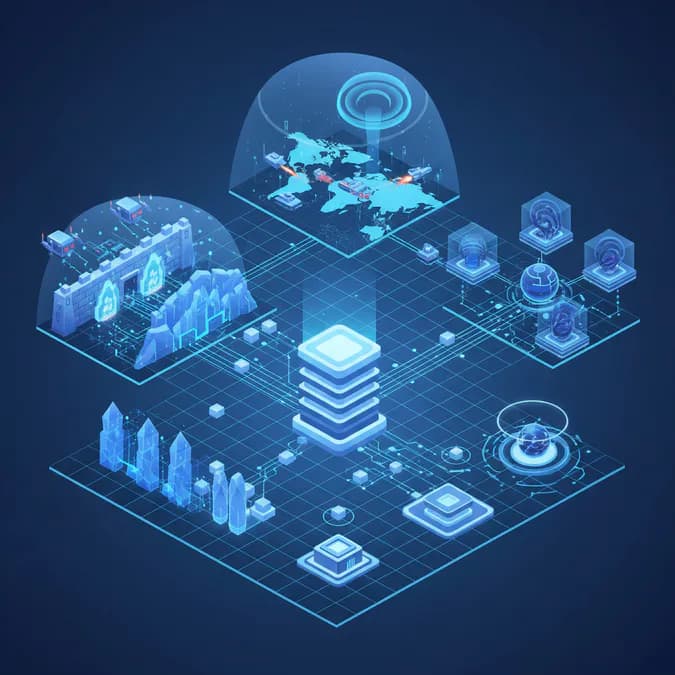
Cybersecurity threats 2026 represent a watershed moment in digital defense, characterized by unprecedented acceleration in threat sophistication and attack speed. March 2026 demonstrated that the convergence of AI-driven attack automation, geopolitical cyber warfare, and supply chain vulnerabilities has fundamentally altered the threat landscape. Security teams worldwide are abandoning traditional detection-focused strategies in favor of rapid containment and segmentation approaches to combat these emerging cybersecurity threats 2026.
The cybersecurity community witnessed a dramatic shift in March 2026, with attacks unfolding in minutes rather than hours or days. AI agents are enabling threat actors to execute complex attack chains with minimal human intervention, while state-aligned actors leverage geopolitical tensions to conduct reconnaissance and disruptive operations. Simultaneously, critical vulnerabilities in widely-used software and hardware platforms have created cascading risks across enterprise environments.
This comprehensive analysis examines the major cybersecurity threats 2026, including the emergence of AI-powered threats, the escalation of cyber warfare, the rapid timeline of modern attacks, and the strategic shift toward containment-based security models that organizations must adopt to survive in this new threat landscape.
AI Agents Creating New Cybersecurity Threats 2026
Artificial intelligence has fundamentally changed the calculus of cyber attacks. Rather than requiring extensive planning and manual execution, AI agents can now autonomously identify vulnerabilities, craft exploits, and execute multi-stage attacks with minimal human oversight. Research indicates that AI-powered attacks are unfolding in minutes, dramatic

This acceleration represents a critical challenge for traditional security operations centers (SOCs) that rely on human analysts to detect and respond to threats. When attacks complete their objectives in minutes, the traditional detection-to-response workflow becomes obsolete. Security teams that spent years perfecting their detection capabilities now find those investments insufficient against adversaries leveraging AI automation.
The implications extend beyond speed. AI agents can also adapt in real-time, modifying their attack strategies based on defensive responses. This creates a dynamic threat environment where static detection rules and signatures become ineffective almost immediately. Organizations must now assume that detection alone cannot prevent compromise and must instead focus on limiting the damage once an intrusion occurs.
Cyber Warfare Escalates Alongside Global Conflict
Geopolitical tensions, particularly in the Middle East, have directly translated into increased cyber operations. According to Adam Meyers, Senior Vice President of Counter Adversary Operations at CrowdStrike, "CrowdStrike is already seeing activity consistent with Iranian-aligned threat actors and hacktivist groups conducting reconnaissance and initiating DDoS attacks." These cybersecurity threats 2026 reflect a coordinated strategy by state-aligned actors to leverage cyber capabilities as instruments of geopolitical pressure.
These operations represent more than isolated incidents. They reflect a coordinated strategy by state-aligned actors to leverage cyber capabilities as instruments of geopolitical pressure. The activities documented in March 2026 included reconnaissance operations designed to identify critical infrastructure vulnerabilities and DDoS attacks intended to disrupt services and demonstrate capability.
The escalation of cyber warfare creates a secondary effect: it diverts attention and resources from other threat actors. While security teams focus on defending against state-sponsored threats, criminal organizations continue their operations, often with less scrutiny. This creates an environment where multiple threat vectors operate simultaneously, each with different motivations and capabilities.
Critical Vulnerabilities Across Major Platforms
March 2026 brought a cascade of critical vulnerabilities affecting widely-deployed systems. Microsoft's Patch Tuesday in March 2026 addressed 82 vulnerabilities, including 8 critical flaws that posed immediate risks to enterprise environments. These vulnerabilities span multiple product lines, from operating systems to productivity software, creating a broad attack surface for threat actors exploiting cybersecurity threats 2026.
CISA issued urgent guidance for patches addressing critical vulnerabilities in Cisco Firewall (CVE-2026-20131) and Apple iOS exploits. Firewall vulnerabilities are particularly concerning because they represent the perimeter defense layer that organizations rely on to protect their networks. Compromised firewalls can enable threat actors to bypass external security controls entirely.
Apple iOS exploits underscore the vulnerability of mobile platforms, which many organizations have integrated into their security infrastructure. Mobile devices often have access to sensitive corporate data and cloud services, making them attractive targets for espionage operations. The exploitation of iOS vulnerabilities by advanced threat actors demonstrates that no platform is immune to compromise.
Ransomware and Supply Chain Threats
March 2026 witnessed significant ransomware and supply chain attacks that demonstrated the vulnerability of interconnected systems. The KadNap botnet infected thousands of ASUS routers, converting them into a proxy network for cybercriminal operations. This attack is particularly concerning because it targets networking equipment that sits at the boundary between internal networks and external systems.
Supply chain threats proved equally damaging. The LiteLLM malware compromised the software supply chain, stealing SSH keys and API tokens at scale. This attack demonstrates how vulnerabilities in development tools and libraries can cascade through entire ecosystems. Organizations using affected versions of LiteLLM inadvertently provided threat actors with credentials to their cloud infrastructure.
The Axios NPM package compromise affected 100 million weekly downloads, illustrating the scale at which supply chain attacks can propagate. When a widely-used open-source package is compromised, the impact extends across thousands of organizations simultaneously, many of whom may not even be aware they are using the affected component. These supply chain vulnerabilities represent some of the most dangerous cybersecurity threats 2026 organizations face.
Major Data Breaches Impact Millions
The human cost of March 2026's cyber attacks became evident through major data breaches affecting millions of individuals. The Dutch telecom company Odido suffered a breach exposing personal data of 6 million customers, with the stolen information subsequently leaked on dark web forums. This breach demonstrates that even large, established telecommunications companies with significant security budgets remain vulnerable to sophisticated attacks.
The Odido breach also illustrates the secondary impact of data breaches. Beyond the immediate operational disruption, the exposure of personal data creates long-term risks for affected individuals, including identity theft and targeted phishing attacks. The leaked data on dark web forums becomes a commodity that threat actors can purchase and exploit for years.
Municipalities also fell victim to cyber attacks in March 2026. The City of Foster experienced a breach that disrupted municipal services and highlighted the vulnerability of local government infrastructure. Municipal systems often operate with limited security budgets and legacy technology, making them attractive targets for ransomware operators seeking quick payouts.
The Shift from Detection to Containment
The acceleration of attack timelines has forced a fundamental rethinking of cybersecurity strategy. Traditional security models emphasize detection—identifying threats as quickly as possible so that response teams can take action. However, when attacks complete their objectives in minutes, detection-based strategies fail because response teams cannot act quickly enough.
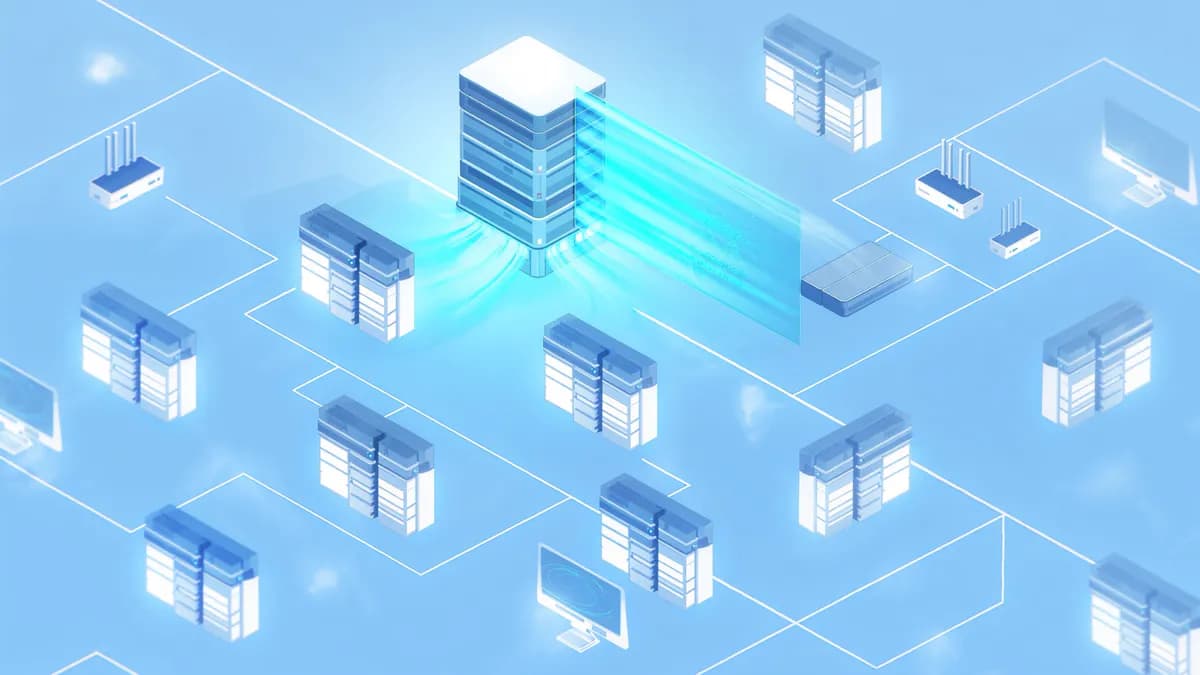
Forward-thinking organizations are shifting toward containment-focused strategies that assume compromise will occur and focus instead on limiting the damage. This approach emphasizes network segmentation, microsegmentation, and rapid isolation of compromised systems. Rather than trying to prevent all breaches, containment strategies aim to prevent breaches from spreading laterally through the network.
Network segmentation divides the network into smaller zones, each with its own security controls. This approach limits the lateral movement available to threat actors who have compromised a single system. Even if an attacker gains access to one segment, they cannot automatically access other segments without additional exploitation.
Microsegmentation takes this concept further, creating security boundaries around individual applications or workloads rather than entire network segments. This granular approach provides more precise control but requires more sophisticated tooling and management. Companies like Illumio specialize in providing the visibility and control necessary for effective microsegmentation strategies.
Implications for Security Teams
The developments of March 2026 require security teams to fundamentally rethink their priorities and investments. Detection capabilities remain important, but they cannot be the primary focus of security strategy. Instead, organizations must invest in:
- Network visibility and segmentation tools that enable rapid identification and isolation of compromised systems
- Incident response capabilities that can execute containment procedures in minutes rather than hours
- Vulnerability management processes that prioritize patching critical flaws affecting perimeter and authentication systems
- Supply chain security programs that monitor and validate the security of third-party dependencies
- Threat intelligence capabilities that provide early warning of emerging threats and attack techniques
Security teams must also recognize that the traditional SOC model, built around 24/7 monitoring and alert response, may not be sufficient for modern threats. Organizations need automated response capabilities that can execute containment procedures without waiting for human analyst approval. This requires careful tuning to avoid excessive false positives, but the alternative—waiting for human response to attacks that complete in minutes—is no longer viable.
Future Outlook and Strategic Recommendations
The trajectory established in March 2026 suggests that cybersecurity threats 2026 and beyond will continue to accelerate in sophistication and speed. Organizations that do not adapt their strategies and investments to this new reality will find themselves increasingly vulnerable to compromise and disruption.
The most critical recommendation is to shift from a detection-centric to a containment-centric security model. This requires investments in network visibility, segmentation, and automated response capabilities. Organizations should conduct network segmentation assessments to identify critical assets and design appropriate security boundaries around them.
Second, organizations must prioritize vulnerability management with a focus on critical flaws affecting perimeter systems, authentication mechanisms, and widely-used software. The volume of vulnerabilities—82 from Microsoft alone in March 2026—makes it impossible to patch everything immediately. Prioritization based on exploitability and business impact is essential.
Third, supply chain security must become a core component of security strategy. Organizations should implement software composition analysis tools to identify vulnerable dependencies, establish vendor security requirements, and monitor for compromises in critical supply chain components.
Finally, organizations should invest in threat intelligence capabilities that provide early warning of emerging threats and attack techniques. Understanding the threat landscape enables more effective prioritization of security investments and faster response to new attack vectors.
Frequently Asked Questions About Cybersecurity Threats 2026
What makes cybersecurity threats 2026 different from previous years?
Cybersecurity threats 2026 are characterized by AI-powered automation that enables attacks to complete in minutes rather than hours or days. This compression of attack timelines makes traditional detection-based security models ineffective, forcing organizations to adopt containment-focused strategies instead.
How can organizations defend against AI-powered attacks?
Organizations cannot rely solely on detection to prevent AI-powered attacks. Instead, they must implement network segmentation, microsegmentation, and automated containment procedures. The focus shifts from preventing compromise to limiting damage once compromise occurs.
Why is supply chain security critical for addressing cybersecurity threats 2026?
Supply chain attacks can affect thousands of organizations simultaneously through compromised software libraries and development tools. A single vulnerability in a widely-used package can propagate across entire ecosystems, making supply chain security essential for defending against modern cybersecurity threats 2026.
What is the difference between network segmentation and microsegmentation?
Network segmentation divides networks into larger zones with security controls, while microsegmentation creates boundaries around individual applications or workloads. Microsegmentation provides more granular control but requires more sophisticated management tools.
Should organizations abandon detection capabilities entirely?
No. Detection remains important for identifying threats and understanding attack patterns. However, organizations must recognize that detection alone cannot prevent compromise and must prioritize containment capabilities alongside detection investments.
Key Takeaways
March 2026 demonstrated that the cybersecurity landscape has fundamentally changed. Cybersecurity threats 2026 include AI-powered attacks that execute in minutes, state-aligned actors conducting cyber warfare operations, and critical vulnerabilities affecting major platforms across the technology stack. The traditional detection-focused security model is no longer sufficient. Organizations must adopt containment-centric strategies that emphasize network segmentation, rapid response automation, and supply chain security. Security teams that recognize this shift and invest accordingly will be better positioned to survive and recover from inevitable compromises.
Sources
- Automated Pipeline
- Biggest Cyber Attacks, Data Breaches, Ransomware Attacks of March 2026
- Cyber impact of conflict in the Middle East, and other cybersecurity news March 2026
- Top 5 Cyber Security stories from last week (week of March 9–15, 2026)
- News - March 2026 - Cyber Security Review
- Top data breaches of March 2026 - SharkStriker
- Source: youtube.com
- Source: diesec.com