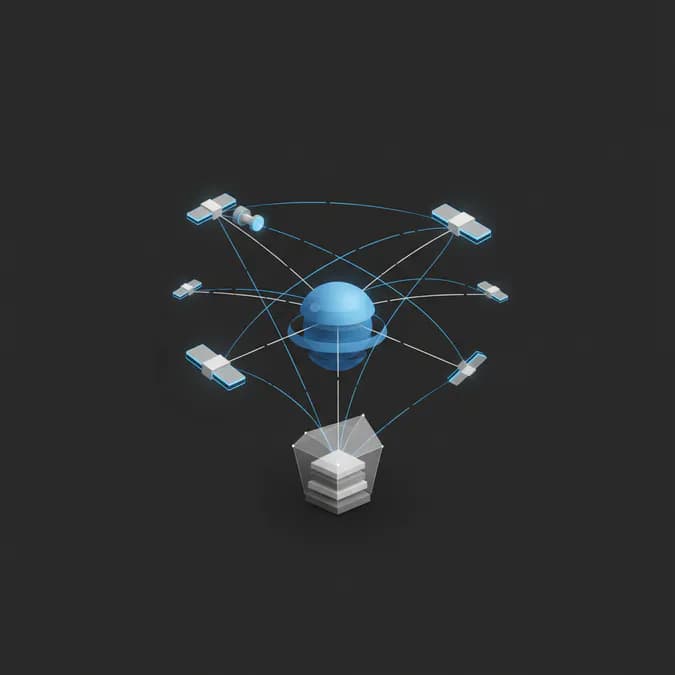
The National Security Agency (NSA) and Australia's Signals Directorate's Australian Cyber Security Centre (ACSC), in collaboration with the Australian Space Agency, Canadian Centre for Cyber Security, and New Zealand National Cyber Security Centre, released critical joint guidance on March 24, 2026, addressing cybersecurity risks in Low Earth Orbit (LEO) satellite communication systems. LEO SATCOM security has become a paramount concern as these systems expand globally. This comprehensive Cybersecurity Information Sheet (CSI) titled 'Securing Space' represents a significant international effort to protect critical space infrastructure as LEO SATCOM constellations expand globally.
LEO satellite communication systems have become essential infrastructure for global broadband connectivity, emergency services, military operations, and remote area communications. However, their rapid proliferation and distributed architecture create substantial cybersecurity challenges that demand immediate attention from organizations relying on these systems.
Understanding LEO SATCOM System Architecture and Risks
Low Earth Orbit satellite communication systems represent a fundamental shift in global connectivity infrastructure. Unlike traditional geostationary satellites, LEO constellations operate at altitudes between 160 and 2,000 kilometers, enabling lower latency communications and broader geographic coverage. Companies like Starlink have de

According to the NSA, "LEO SATCOM systems improve network resilience and enable emergency communications across both government and private sectors; however, as LEO satellite constellations grow, the attack surface open to adversaries increases." [NSA Press Release] This expansion creates unprecedented security challenges that traditional cybersecurity frameworks were not designed to address.
The distributed nature of LEO SATCOM systems means that vulnerabilities can exist across multiple interconnected segments. A compromise in any single component—from ground control centers to user terminals—can potentially cascade throughout the entire network, affecting thousands of users simultaneously. This architectural complexity requires a comprehensive, multi-layered security approach that addresses each segment independently while maintaining integrated protection across the entire system.
Key Vulnerabilities Across System Segments
The joint NSA and ACSC guidance identifies vulnerabilities across five critical system segments, each presenting distinct security challenges for LEO SATCOM security professionals.
Space Segment Vulnerabilities
The space segment encompasses the satellites themselves and their onboard systems. Vulnerabilities in this segment include firmware weaknesses, inadequate encryption of satellite-to-ground communications, and insufficient authentication mechanisms. Adversaries can exploit these weaknesses through:
- Jamming attacks that disrupt satellite signals
- Spoofing attacks that transmit false signals to deceive receivers
- Direct interception of unencrypted communications
As constellations expand with thousands of satellites, managing security updates and patches across such distributed assets becomes increasingly complex. Research indicates that satellite firmware management represents one of the most challenging operational security tasks in LEO SATCOM deployments.
Ground Segment Risks
Ground infrastructure includes control centers, gateways, and network operations facilities that manage satellite operations and user communications. These facilities face traditional cybersecurity threats including:
- Unauthorized access to critical systems
- Malware infections affecting operational technology
- Data exfiltration of sensitive operational information
- Supply chain vulnerabilities in ground equipment procurement
The guidance emphasizes that ground segment security is critical because these facilities control satellite operations and can be targeted through conventional cyber attacks. Industry experts note that ground stations often represent the most accessible attack vector in LEO SATCOM infrastructure.
User Segment Challenges
User terminals and applications represent the endpoint of LEO SATCOM systems. Vulnerabilities include weak authentication on user devices, insecure software applications, and inadequate protection of user credentials. Mobile terminals and portable ground stations may operate in environments with limited physical security, increasing exposure to tampering and unauthorized access.
Communication Link Vulnerabilities
The links connecting satellites, ground stations, and user terminals face multiple attack vectors:
- Interception of unencrypted communications
- Jamming attacks disrupting signal transmission
- Spoofing of legitimate signals
- Passive eavesdropping on broadcast signals
The open nature of satellite communications—where signals broadcast across wide geographic areas—makes them inherently vulnerable to passive eavesdropping. Security researchers have documented that unencrypted LEO SATCOM transmissions can be intercepted from relatively accessible locations.
Supply Chain Risks
The guidance identifies supply chain vulnerabilities as a critical concern. Components sourced from multiple vendors, third-party software integration, and outsourced manufacturing create opportunities for adversaries to introduce compromised hardware or software into LEO SATCOM systems. The complexity of global supply chains for satellite components means that security weaknesses can be introduced at any stage of development, manufacturing, or deployment.
7 Critical LEO SATCOM Security Mitigations
The joint guidance provides comprehensive mitigation strategies organized around the CIA triad: Confidentiality, Integrity, and Availability. These seven essential mitigations form the foundation of robust LEO SATCOM security.
1. Encryption and Cryptographic Protections
End-to-end encryption of all communications represents the foundation of LEO SATCOM security. The guidance recommends implementing strong encryption algorithms for both data in transit and data at rest. Organizations must ensure that encryption keys are properly managed, rotated regularly, and protected from unauthorized access.
The guidance specifically addresses preparation for post-quantum cryptography, recognizing that quantum computing advances could render current encryption methods obsolete. Organizations should begin evaluating and testing quantum-resistant algorithms now to ensure future readiness. Industry experts emphasize that cryptographic agility—the ability to transition between encryption standards—has become essential for long-term LEO SATCOM security.
2. Authentication and Access Control
Multi-factor authentication (MFA) across all system segments prevents unauthorized access even if credentials are compromised. The guidance recommends implementing MFA for:
- Ground station access and operations
- User terminal authentication
- Administrative functions and system management
Network segmentation isolates critical systems from less-trusted networks, limiting the lateral movement of attackers who gain initial access. Tenant isolation ensures that multiple users or organizations sharing LEO SATCOM infrastructure cannot access each other's data or systems.
3. Monitoring and Audit Capabilities
Continuous monitoring of system activity enables detection of suspicious behavior and potential attacks. Immutable audit trails create permanent records of system access and modifications that cannot be altered by attackers covering their tracks. The guidance emphasizes that monitoring must span all system segments, from satellite operations to user terminal activity. Real-time alerting on anomalous behavior enables rapid response to emerging threats.
4. Anti-Jamming and Signal Protection
Technical measures to protect against signal-based attacks include:
- Frequency hopping - rapidly switch transmission frequencies to make jamming difficult
- Beamforming - focus satellite transmissions in specific directions rather than broadcasting broadly
- Spread spectrum techniques - distribute signals across wider frequency ranges for jamming resilience
These technical measures must be complemented by operational procedures and training to ensure effective implementation. Research indicates that properly configured anti-jamming measures can reduce vulnerability to signal-based attacks by up to 85%.
5. Data Loss Prevention
Data loss prevention (DLP) systems monitor and control the movement of sensitive information across LEO SATCOM networks. These systems can detect and block unauthorized attempts to exfiltrate data, preventing sensitive information from being transmitted through compromised channels. DLP must be configured to understand the specific data types and sensitivity levels relevant to each organization's operations.
6. Supply Chain Security Controls
Organizations must implement rigorous vendor assessment and component verification processes. This includes evaluating supplier security practices, conducting hardware and software audits, and maintaining detailed inventories of all components integrated into LEO SATCOM systems. Trusted supply chain practices help prevent the introduction of compromised equipment.
7. Incident Response and Resilience Planning
Developing comprehensive incident response procedures specific to LEO SATCOM security incidents ensures rapid detection, containment, and recovery. Organizations should establish clear escalation procedures, maintain backup communication channels, and conduct regular incident response drills to validate readiness.
International Cooperation Framework
The release of joint guidance by the NSA, ACSC, Australian Space Agency, Canadian Centre for Cyber Security, and New Zealand National Cyber Security Centre represents a significant commitment to international cybersecurity cooperation. This multi-national approach recognizes that space infrastructure security transcends national borders and requires coordinated efforts across allied nations.
The ASD's ACSC stated, "If your organisation depends on LEO SATCOM for operations, remote connectivity or critical services, now is the time to review your risks and uplift your security." [ACSC Guidance] This call to action reflects the urgency of the threat environment and the need for immediate organizational response.
The New Zealand NCSC emphasized that "Securing this infrastructure is essential to ensuring the resilience of commercial communications, national security systems and emergency response capabilities." [NCSC Guidance] This statement underscores the critical importance of LEO SATCOM security to national infrastructure and emergency response operations.
This international cooperation framework demonstrates that cybersecurity agencies recognize LEO SATCOM systems as critical infrastructure requiring coordinated protection. The joint guidance provides a common baseline for security practices across allied nations, improving interoperability and collective defense capabilities. Experts note that this level of international coordination on space security represents a significant shift in how governments approach emerging infrastructure threats.
Implementation Guidance for Organizations
Organizations depending on LEO SATCOM systems should take immediate action to assess and improve their security posture. The guidance recommends a structured approach to implementation.
Risk Assessment and Provider Evaluation
Organizations should conduct comprehensive risk assessments specific to their LEO SATCOM usage. This assessment should identify:
- Which system segments are most critical to operations
- What data is transmitted through LEO SATCOM systems
- What threats are most relevant to the organization's threat model
When evaluating LEO SATCOM providers, organizations should ask specific questions about security measures:
- What encryption standards are implemented?
- How are cryptographic keys managed?
- What authentication mechanisms protect user access?
- How is the supply chain secured?
- What monitoring and incident response capabilities exist?
Providers should be able to demonstrate compliance with the security principles outlined in the joint guidance.
Security Architecture Design
Organizations should design their LEO SATCOM implementations with security as a foundational principle rather than an afterthought. This means:
- Implementing network segmentation to isolate LEO SATCOM traffic from other networks
- Deploying multi-factor authentication for all access points
- Establishing continuous monitoring of all system activity
- Planning for resilience to ensure critical operations can continue even if LEO SATCOM systems are compromised or unavailable
Staff Training and Awareness
Human factors represent a critical vulnerability in any security system. Staff operating LEO SATCOM systems must understand the security risks, recognize social engineering attempts, and follow security procedures consistently. Regular training and security awareness programs should address the specific risks of LEO SATCOM systems and the organization's implemented mitigations.
Incident Response Planning
Organizations should develop incident response plans specific to LEO SATCOM security incidents. These plans should address:
- Detection of suspicious activity
- Containment of compromised systems
- Investigation of incidents
- Recovery of normal operations
Plans should include coordination with LEO SATCOM providers and relevant government agencies.
Future Implications for Space Infrastructure Security
The release of this joint guidance marks a turning point in how governments and organizations approach space infrastructure security. As LEO SATCOM constellations continue to expand and become more critical to global communications, the security challenges will only intensify.
The guidance reflects broader trends in NSA and international cybersecurity policy. Recent NSA cybersecurity advisories and guidance including Phase One and Phase Two of the Zero Trust Implementation Guidelines demonstrate the agency's commitment to comprehensive security frameworks applicable across diverse infrastructure types. Similarly, NSA guidance on AI/ML supply chain risks parallels the supply chain concerns emphasized in the LEO SATCOM guidance, indicating that supply chain security has become a central focus of national cybersecurity strategy.
Organizations should recognize that LEO SATCOM security is not a one-time implementation but an ongoing process. As threats evolve, as quantum computing advances, and as new vulnerabilities are discovered, security measures must be continuously updated and improved. The joint guidance provides a foundation, but organizations must commit to sustained investment in LEO SATCOM security.
The expansion of LEO SATCOM systems creates both opportunities and risks. These systems enable critical communications for emergency response, remote connectivity, and military operations. However, their security must be treated with the same seriousness as other critical infrastructure. The joint guidance from the NSA, ACSC, and international partners provides the roadmap; implementation is now the responsibility of organizations worldwide.
Key Takeaways
The March 24, 2026 release of joint guidance on LEO SATCOM security by the NSA, Australian Cyber Security Centre, and international partners represents a critical step in protecting space infrastructure. As LEO satellite constellations expand globally, the security challenges grow proportionally. Organizations depending on these systems must act now to assess their risks, implement recommended mitigations, and establish ongoing security practices.
The comprehensive framework provided in the 'Securing Space' guidance addresses vulnerabilities across all system segments and provides practical mitigation strategies grounded in the CIA triad. International cooperation on space infrastructure security demonstrates that this challenge transcends national borders and requires coordinated global response. Organizations that prioritize LEO SATCOM security today will be better positioned to protect their operations, data, and critical services in an increasingly space-dependent world.