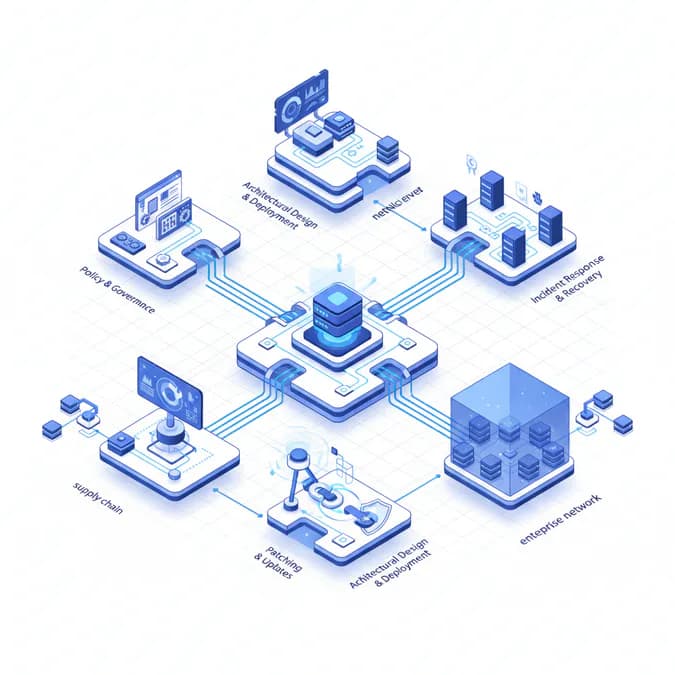
The cybersecurity landscape shifted significantly in March 2026 with two critical developments: the National Institute of Standards and Technology released its first major NIST DNS security guidance update in over a decade, and supply chain vulnerabilities surfaced through compromised packages in popular repositories. These events underscore the evolving nature of organizational security challenges and the need for updated best practices across infrastructure and software dependencies.
DNS has long been the backbone of internet connectivity, yet it remained largely undersecured in most organizational environments. The new NIST SP 800-81 Revision 3 guidance fundamentally reframes DNS from a background operational service into an active security control within zero-trust architectures. Simultaneously, the compromise of LiteLLM packages on PyPI demonstrates how supply chain attacks continue to threaten organizations despite increased awareness.
This article explores both developments, their implications for organizational security postures, and the actionable steps security teams should take to address these emerging risks.
DNS Infrastructure: The Overlooked Security Foundation
The Domain Name System underpins nearly every network connection an organization makes. It translates human-readable domain names into IP addresses, enabling everything from email delivery to web browsing. Despite its criticality, DNS has historically been undersecured, creating multiple attack vectors that sophisticated threat actors exploit.
 >
>
DNS vulnerabilities enable various attack types including domain hijacking, phishing attacks, and data exfiltration. Attackers can intercept DNS queries, redirect traffic to malicious servers, or manipulate DNS responses to compromise organizational security. The protocol's foundational role in network operations means that DNS compromises can cascade across entire infrastructure environments.
Beyond direct attacks, DNS security directly impacts email security protocols. DMARC, SPF, and DKIM all rely on DNS for proper configuration and validation. Weak DNS security undermines these email authentication mechanisms, increasing vulnerability to spoofing and phishing attacks. Organizations that neglect DNS security inadvertently weaken their entire email security posture.
The criticality of DNS security extends to domain protection as well. Dangling CNAME records and lame delegations can enable subdomain takeovers, allowing attackers to claim control of organizational subdomains and use them for malicious purposes. These configuration weaknesses represent common but often overlooked security gaps in many organizations.
NIST SP 800-81 Revision 3: A Comprehensive Security Framework
On March 19, 2026, the National Institute of Standards and Technology released SP 800-81 Revision 3, marking the first significant update to NIST DNS security guidance in over 12 years. The previous version, published in 2013, predated modern threat landscapes, zero-trust architectures, and contemporary encryption standards. This new guidance addresses these gaps comprehensively. [Source: Help Net Security]
The updated framework rests on three core pillars: securing DNS infrastructure, ensuring DNS system and configuration integrity, and implementing protective DNS as a cybersecurity control. According to NIST, "DNS is no longer merely an operational service. It is a security control that can be an important part of an enterprise security architecture." This philosophical shift represents a fundamental change in how organizations should approach DNS security. [Source: ZeroFox Blog]
Three Core Pillars of DNS Security
The framework emphasizes protective DNS as a threat-blocking mechanism within zero-trust architectures. Rather than assuming internal DNS traffic is trustworthy, organizations should implement DNS filtering to block malicious domains, preventing users from accessing known malicious sites. This approach treats DNS as an enforcement point for security policies, not merely a translation service.
DNSSEC receives significant attention in the updated guidance, with specific recommendations for modern cryptographic algorithms. Rather than relying on RSA-based signatures, NIST recommends ECDSA and Ed25519 algorithms for improved security and performance. The guidance also recommends shorter signature validity windows, suggesting 5-7 days rather than longer periods, reducing the window of vulnerability if signing keys are compromised. [Source: Red Sift Blog]
DNS Encryption and Traffic Protection
Encryption of DNS traffic represents another critical recommendation. The guidance covers three primary protocols:
- DNS over TLS (DoT): Provides straightforward encryption at the transport layer, securing DNS queries from interception
- DNS over HTTPS (DoH): Integrates with existing HTTPS infrastructure, enabling encrypted DNS through standard web protocols
- DNS over QUIC (DoQ): Offers improved performance characteristics through QUIC protocol benefits
These protocols prevent interception and eavesdropping on DNS queries, protecting organizational traffic from passive monitoring. The guidance also recommends blocking unauthorized outbound encrypted DNS traffic, preventing users from bypassing organizational DNS security controls through alternative DNS providers.
Organizational Implementation Focus
The framework targets both executives and operational teams, recognizing that NIST DNS security requires organizational commitment across multiple levels. It recommends hybrid cloud-on-premises deployments that maintain security across distributed infrastructure. Integration with Security Information and Event Management (SIEM) systems enables organizations to monitor DNS traffic for suspicious patterns and respond to threats in real-time.
Implementing NIST DNS Security Recommendations
Organizations should approach NIST SP 800-81r3 implementation systematically. The guidance provides a roadmap for securing DNS infrastructure across multiple dimensions.
Step 1: Audit Current DNS Infrastructure
Organizations should audit their current DNS infrastructure against the NIST framework. This includes identifying all DNS servers, resolvers, and authoritative nameservers within the environment. Many organizations discover undocumented DNS infrastructure during this process, representing potential security gaps. A comprehensive audit should document:
- All DNS servers and their configurations
- Resolver deployments across the network
- Authoritative nameserver configurations
- Current encryption implementations
- Existing DNSSEC deployments
- DNS traffic monitoring capabilities
Step 2: Deploy Protective DNS Capabilities
Implement protective DNS capabilities to block malicious domains. This involves deploying DNS filtering solutions that maintain threat intelligence feeds and block known malicious domains in real-time. Organizations should evaluate solutions that integrate with their existing security infrastructure and provide visibility into DNS traffic patterns. Protective DNS should block:
- Known malicious domains
- Phishing sites
- Malware distribution networks
- Command and control infrastructure
- Botnet domains
Step 3: Implement DNSSEC with Modern Algorithms
Deploy DNSSEC with modern algorithms as recommended by NIST. Organizations should migrate from RSA-based signatures to ECDSA or Ed25519 algorithms. This includes updating signing key management practices and implementing shorter signature validity windows of 5-7 days as recommended.
Step 4: Encrypt DNS Traffic
Encrypt DNS traffic using DoT, DoH, or DoQ protocols. Organizations should evaluate which protocol best fits their infrastructure and security requirements. Consider implementing multiple protocols to support diverse client types and use cases.
Step 5: Implement Monitoring and Logging
Implement comprehensive monitoring and logging of DNS traffic. Integration with SIEM systems enables detection of suspicious DNS patterns, including unusual query volumes, queries to suspicious domains, or attempts to bypass organizational DNS controls.
Supply Chain Security: The LiteLLM Package Compromise
While NIST guidance addresses infrastructure security, concurrent developments highlight supply chain vulnerabilities that threaten organizations through software dependencies. The compromise of LiteLLM packages on PyPI exemplifies these risks.
LiteLLM is a popular Python library that provides a unified interface for interacting with various large language models. Its presence on PyPI, the Python Package Index, makes it accessible to thousands of developers and organizations. Compromised packages in such repositories can propagate malicious code across numerous organizations through routine dependency updates.
The Nature of Supply Chain Attacks
Supply chain attacks through package repositories represent a particularly insidious threat vector. Organizations often update dependencies automatically or during regular maintenance windows without thoroughly vetting each update. Attackers who compromise package repositories can inject malicious code that executes with the same privileges as the application using the compromised package.
The LiteLLM compromise underscores the need for robust software repository security practices. Organizations should implement several protective measures:
- Verify package signatures and checksums: Ensure packages are signed by trusted developers and checksums match expected values before installation
- Maintain software bills of materials (SBOM): Document all dependencies and their versions for visibility and tracking
- Monitor security advisories: Track security advisories affecting used packages and implement patches promptly
- Use private package mirrors: Consider private package mirrors that cache and scan packages before making them available to development teams
Detecting Compromised Packages
Organizations should implement detection mechanisms for compromised packages. This includes monitoring for unusual package behavior, unexpected network connections, or suspicious code patterns. Integration with application security tools can help identify potentially malicious code before it reaches production environments.
Integrating Infrastructure and Supply Chain Security
The convergence of NIST DNS guidance updates and supply chain vulnerabilities highlights the need for comprehensive security strategies that address both infrastructure and software dependencies.
Organizations should recognize that DNS security and software supply chain security are complementary rather than competing priorities. A compromised package might attempt to exfiltrate data through DNS queries, making DNS security controls essential for detecting and preventing such attacks. Conversely, DNS security alone cannot prevent supply chain compromises; organizations need robust software governance practices.
Holistic Security Architecture
A holistic security approach integrates NIST DNS recommendations with software supply chain security practices. This includes:
- Implementing protective DNS to block malicious domains that compromised packages might contact
- Monitoring DNS traffic for suspicious patterns that might indicate compromise
- Maintaining visibility into software dependencies through SBOM practices
- Coordinating between infrastructure and application security teams
- Establishing incident response procedures for both infrastructure and supply chain compromises
This integrated approach ensures that security controls across infrastructure and software layers work together to provide comprehensive protection.
Regulatory and Compliance Implications
The NIST SP 800-81r3 update carries implications beyond best practices. The guidance influences rising compliance mandates, including the EU NIS2 Directive, which increasingly highlights DNS security in regulatory frameworks. Organizations subject to these regulations should recognize that NIST guidance provides a foundation for meeting regulatory requirements.
Compliance frameworks increasingly expect organizations to treat DNS as a security control rather than background infrastructure. Auditors and regulators will reference NIST guidance when evaluating organizational DNS security postures. Organizations that implement NIST recommendations position themselves favorably for compliance assessments.
Regulatory Alignment
The updated guidance aligns with emerging regulatory expectations around critical infrastructure protection and cybersecurity governance. Organizations operating in regulated industries should review their compliance obligations and ensure DNS security practices meet or exceed regulatory requirements.
Moving Forward: Organizational Action Items
Organizations should take immediate action on several fronts to address both the NIST DNS guidance update and supply chain security risks.
Immediate Actions
- Obtain and review NIST SP 800-81r3: Access the complete guidance through official NIST channels and conduct a thorough review
- Conduct DNS infrastructure audit: Perform a comprehensive audit of current DNS infrastructure against the framework's recommendations
- Develop implementation plan: Create a prioritized implementation plan addressing the most critical gaps first
- Implement package verification: Establish package verification practices for all software dependencies
- Maintain software bills of materials: Document all dependencies and their versions for visibility and tracking
- Monitor security advisories: Establish processes to monitor and respond to security advisories affecting used packages
Long-Term Strategy
For supply chain security, organizations should implement comprehensive package verification practices, maintain software bills of materials, and monitor for security advisories affecting used packages. Consider establishing a software supply chain security program that addresses both open-source and commercial dependencies.
The convergence of updated infrastructure guidance and supply chain vulnerabilities creates both challenges and opportunities. Organizations that respond proactively to these developments strengthen their overall security postures and reduce exposure to evolving threats. By implementing NIST DNS recommendations and establishing robust supply chain security practices, organizations can build resilient security architectures capable of defending against contemporary threats.
Key Takeaways
- NIST DNS security guidance is crucial for modern cybersecurity frameworks.
- Organizations must implement protective DNS to enhance security postures.
- Supply chain vulnerabilities require robust verification and monitoring practices.
- Compliance with NIST recommendations aids in meeting regulatory requirements.
- A holistic approach integrates DNS security with software supply chain security.
Frequently Asked Questions
What is NIST DNS security?
NIST DNS security refers to the guidelines and recommendations provided by the National Institute of Standards and Technology to enhance the security of Domain Name System (DNS) infrastructure.
Why is DNS security important?
DNS security is vital because it protects against various cyber threats, including domain hijacking and phishing attacks, which can compromise organizational security.
How can organizations implement NIST DNS security recommendations?
Organizations can implement NIST DNS security recommendations by auditing their DNS infrastructure, deploying protective DNS capabilities, and ensuring proper encryption and monitoring practices.
What are the implications of the LiteLLM package compromise?
The LiteLLM package compromise highlights the risks associated with supply chain vulnerabilities, emphasizing the need for robust security practices in software dependency management.
How does NIST DNS security relate to compliance?
NIST DNS security guidance provides a framework for organizations to meet regulatory requirements, ensuring that DNS is treated as a critical security control.
Sources
- Automated Pipeline
- NIST Publishes SP 800-81r3: Secure Domain Name System (DNS) Deployment Guide final version
- NIST updates its DNS security guidance for the first time in over a decade
- NIST DNS Security Best Practices: Top 5 Takeaways
- NIST DNS update: What this means for your organization
- What the New NIST Secure DNS Deployment Guidance Means for External Threat Protection
- Source: nvlpubs.nist.gov
- Source: csrc.nist.gov
- Source: wilderssecurity.com
- Source: nist.gov