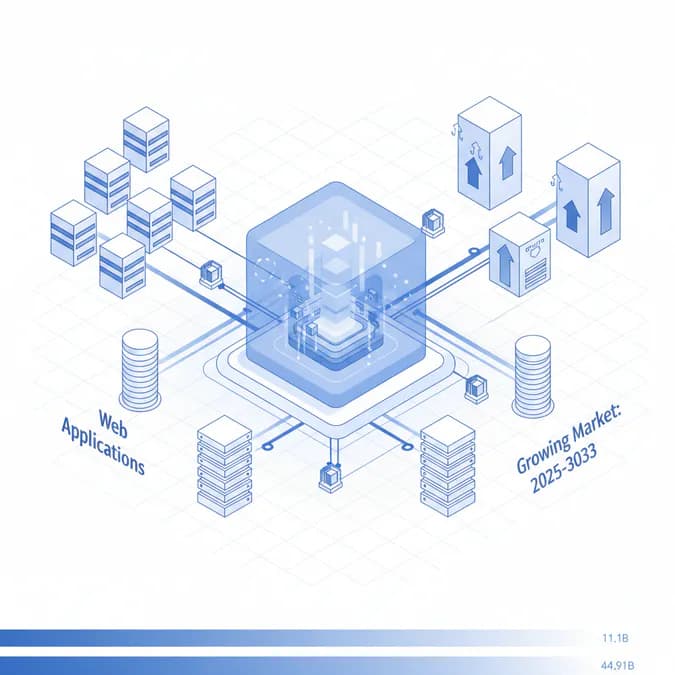
The Web Application Firewall (WAF) market is experiencing unprecedented growth as organizations worldwide grapple with escalating cybersecurity threats. A comprehensive market analysis from ResearchAndMarkets.com reveals that the WAF sector is poised for substantial expansion through 2033, driven by increasing SQL injection attacks, data breaches, and the complexity of modern application environments. This article explores the competitive landscape, key market drivers, deployment trends, and strategic developments reshaping enterprise web application security. The Web Application Firewall market is essential for organizations looking to enhance their cybersecurity posture.
Understanding Web Application Firewalls
A Web Application Firewall (WAF) is a specialized security solution designed to protect web applications from common exploits and attacks. Operating at Layer 7 of the OSI model, WAFs inspect and filter HTTP traffic between web applications and the internet

The fundamental advantage of WAF technology lies in its ability to understand application-specific threats that traditional network firewalls cannot detect. By analyzing the content and context of web requests, WAFs can distinguish between normal user behavior and sophisticated attack patterns, providing granular protection tailored to individual application requirements.
How WAFs Protect Applications
WAFs employ multiple detection and prevention techniques to safeguard web applications:
- Signature-based detection: Identifies known attack patterns and malicious code signatures
- Behavioral analysis: Detects anomalous traffic patterns and suspicious user activities
- Heuristic analysis: Identifies potential threats based on suspicious characteristics and behaviors
- Machine learning: Adapts to new threats by learning from historical attack data
- Rate limiting: Prevents brute force attacks and resource exhaustion
- Geo-blocking: Restricts access based on geographic location when appropriate
Market Size and Growth Projections
The WAF market demonstrates remarkable growth potential across multiple forecast periods. According to Precedence Research, the global Web Application Firewall market is projected to expand from USD 11.1 billion in 2025 to USD 44.91 billion by 2035, representing substantial market expansion over the decade. This projection reflects the critical importance organizations place on web application security as digital transformation accelerates.
ResearchAndMarkets.com provides a more conservative but still robust forecast, projecting the market to grow from USD 7.07 billion in 2025 to USD 20.44 billion by 2033, representing a compound annual growth rate (CAGR) of 14.2%. This consistent double-digit growth rate across multiple research sources underscores the market's resilience and the increasing prioritization of web application security investments by enterprises globally.
Growth Drivers Across Forecast Periods
The sustained growth projections reflect multiple reinforcing factors:
- Increasing frequency and sophistication of web application attacks
- Regulatory compliance requirements across industries
- Digital transformation and cloud migration initiatives
- Expansion of e-commerce and online services
- Integration of AI and machine learning capabilities
- Multi-cloud adoption requiring unified security approaches
Key Market Drivers and Threats
The explosive growth in the WAF market is fundamentally driven by the rising frequency and sophistication of cybersecurity threats targeting web applications. SQL injection remains one of the most prevalent attack vectors, exploiting vulnerabilities in application code to gain unauthorized database access. Data breaches continue to escalate in both frequency and impact, with attackers increasingly targeting web applications as entry points to enterprise networks.
Beyond traditional threats, organizations face mounting pressure from bot traffic, which can consume resources, scrape data, and launch distributed denial-of-service (DDoS) attacks. The shift to remote work has expanded the attack surface, as employees access applications from diverse locations and devices outside traditional network perimeters. Additionally, regulatory mandates including GDPR, HIPAA, and PCI DSS require organizations to implement robust security controls, with WAF solutions serving as a critical component of compliance strategies.
Emerging Threat Landscape
The threat environment continues to evolve, creating new demands for WAF capabilities:
- Zero-day exploits: Previously unknown vulnerabilities that lack available patches
- API attacks: Exploitation of application programming interfaces used for service integration
- Credential stuffing: Automated attacks using compromised username and password combinations
- Account takeover: Unauthorized access to legitimate user accounts
- Web scraping: Automated extraction of sensitive data from web applications
- DDoS attacks: Overwhelming application resources with massive traffic volumes
AI and Machine Learning Integration
The integration of artificial intelligence and machine learning into WAF solutions represents a significant market opportunity. These advanced technologies enable predictive threat detection, reducing false positives that plague traditional rule-based systems and allowing security teams to focus on genuine threats. As organizations adopt multi-cloud environments and embrace zero-trust security architectures, the demand for intelligent, adaptive WAF solutions continues to intensify.
Deployment Models and Regional Trends
Cloud-based WAF solutions have emerged as the dominant deployment model, capturing 54.6% market share in 2025 according to Precedence Research. This preference reflects the scalability, flexibility, and cost-effectiveness of cloud-based security solutions, particularly for organizations managing distributed applications and multi-cloud infrastructures. Cloud WAF deployments eliminate the need for on-premises hardware, reduce operational overhead, and provide automatic updates and threat intelligence integration.
Deployment Model Comparison
Organizations choose between three primary deployment approaches based on their specific requirements:
- Cloud-based WAF (54.6% market share): Hosted security solutions offering scalability, automatic updates, and minimal operational overhead. Ideal for organizations with distributed applications and limited security staff.
- On-premises WAF: Hardware or software solutions deployed within organizational networks, providing customization and control. Preferred by organizations with strict data residency requirements or legacy system integration needs.
- Hybrid WAF: Combination of cloud and on-premises solutions, balancing scalability with control. Growing adoption among enterprises managing complex, multi-cloud environments.
Regional Market Dynamics
Regionally, North America maintains market leadership with 41% market share in 2025, driven by mature cybersecurity awareness, significant IT spending, and the concentration of major technology companies. However, Asia-Pacific exhibits the highest growth potential, fueled by rapid digital transformation, explosive e-commerce expansion, and government-mandated cybersecurity initiatives. This regional shift reflects the globalization of digital commerce and the increasing sophistication of threat actors operating across international borders.
The Asia-Pacific region's accelerating adoption is driven by several factors:
- Rapid expansion of digital payment systems and e-commerce platforms
- Government cybersecurity initiatives and regulatory frameworks
- Increasing foreign direct investment in technology infrastructure
- Growing awareness of cybersecurity risks among enterprises
- Availability of affordable cloud-based WAF solutions
Industry Verticals and Adoption Patterns
The Banking, Financial Services, and Insurance (BFSI) vertical leads WAF adoption with approximately 31% market share, reflecting the sector's exposure to financial fraud, regulatory requirements, and the critical nature of protecting customer financial data. Healthcare organizations are rapidly expanding their WAF deployments to protect patient data and comply with HIPAA requirements, particularly as healthcare providers digitize patient records and expand telemedicine capabilities.
Vertical-Specific Security Requirements
Different industries face unique security challenges that drive WAF adoption:
- BFSI (31% market share): Protection of financial transactions, prevention of fraud, compliance with PCI DSS and regulatory requirements
- Healthcare: Protection of patient data, HIPAA compliance, security of telemedicine platforms
- Retail and E-commerce: Protection of payment information, prevention of inventory manipulation, maintenance of service availability
- Manufacturing: Protection of intellectual property, security of industrial control systems, supply chain security
- Government: Protection of citizen data, compliance with security standards, defense against nation-state actors
- Technology: Protection of software and services, API security, protection of customer data
SME Adoption Acceleration
Small and medium-sized enterprises (SMEs) represent the fastest-growing segment, driven by the availability of affordable cloud-based WAF solutions offered on subscription models. Previously, WAF technology was primarily accessible to large enterprises with dedicated security budgets and technical expertise. Cloud-based solutions have democratized access to enterprise-grade web application security, enabling SMEs to implement sophisticated protection without significant capital expenditure or specialized personnel.
This democratization of security technology is reshaping the competitive landscape, as SMEs increasingly adopt the same security tools and practices as larger enterprises. The shift toward subscription-based pricing models has removed traditional barriers to entry, allowing organizations of all sizes to benefit from advanced threat detection and prevention capabilities.
Strategic Developments and Future Outlook
The WAF market is characterized by intense competitive activity, with established security vendors, cloud infrastructure providers, and specialized WAF companies vying for market share. ResearchAndMarkets.com's comprehensive report analyzes key players, product developments, mergers, and strategic collaborations shaping the industry landscape through 2033.
Cloud Provider Expansion
Major cloud infrastructure providers, including Amazon Web Services, are expanding their WAF offerings to capture market share in the rapidly growing cloud security segment. As noted in market research, "The rapid rise of multi-cloud adoption and the increasing complexity of cyber threats present a major growth opportunity for Amazon Web Services in the WAF market." This expansion reflects the strategic importance of web application security in cloud computing environments.
Cloud providers are leveraging their infrastructure advantages to offer integrated security solutions that combine WAF capabilities with other security services, creating comprehensive platforms that address multiple security requirements.
Product Development Trends
Product development trends emphasize AI and ML-based threat detection capabilities, enabling WAFs to identify zero-day exploits and advanced persistent threats that evade signature-based detection. Integration with Security Information and Event Management (SIEM) systems, threat intelligence platforms, and cloud access security brokers (CASBs) is becoming standard, creating comprehensive security ecosystems.
Key product development areas include:
- AI/ML threat detection: Advanced algorithms that identify novel attack patterns and zero-day exploits
- API security: Specialized protection for application programming interfaces and microservices
- Bot management: Sophisticated detection and mitigation of malicious bot traffic
- DDoS protection: Advanced mitigation of distributed denial-of-service attacks
- Threat intelligence integration: Real-time incorporation of global threat data
- Automated response: Intelligent automation of threat detection and response workflows
Mergers, Acquisitions, and Collaborations
Mergers and acquisitions continue to reshape the competitive landscape, as larger security vendors acquire specialized WAF companies to enhance their product portfolios and expand market reach. Strategic collaborations between WAF vendors and cloud providers, managed security service providers (MSSPs), and system integrators are creating integrated solutions that address the full spectrum of application security requirements.
These strategic activities reflect the industry's recognition that comprehensive application security requires integration across multiple technologies and service providers. Organizations increasingly expect unified platforms that combine WAF capabilities with other security functions, driving consolidation and partnership activity.
API Security Evolution
The emergence of API security as a distinct concern is driving WAF evolution, as organizations recognize that modern applications rely heavily on APIs for internal and external integrations. WAF solutions are increasingly incorporating API-specific protection capabilities, including rate limiting, authentication enforcement, and payload validation tailored to API traffic patterns.
API security represents a critical frontier for WAF vendors, as the proliferation of microservices architectures and serverless computing creates new attack surfaces that traditional WAF approaches may not adequately address. Vendors that successfully integrate API security into their WAF platforms will be well-positioned to capture market share in this rapidly expanding segment.
Zero-Trust Architecture Integration
The adoption of zero-trust security architectures is creating new opportunities for WAF vendors. Zero-trust principles require verification of every access request, regardless of source or destination. WAFs are evolving to support zero-trust implementations by providing granular access controls, continuous authentication, and detailed logging and monitoring capabilities.
Organizations implementing zero-trust architectures recognize that WAFs are essential components of comprehensive security strategies, driving increased investment in advanced WAF solutions that support zero-trust principles and practices.
The Bottom Line
The Web Application Firewall market stands at an inflection point, driven by converging forces including escalating cyber threats, regulatory mandates, cloud adoption, and technological advancement. The projected growth from USD 11.1 billion in 2025 to USD 44.91 billion by 2035 reflects the critical importance of web application security in an increasingly digital world. Organizations across all industries and sizes are recognizing that protecting web applications is not optional but essential to maintaining business continuity, protecting customer data, and meeting regulatory obligations.
The shift toward cloud-based deployments, AI/ML-powered threat detection, and API security integration will define the competitive landscape through 2033. As cyber threats continue to evolve in sophistication and frequency, WAF solutions will become increasingly intelligent, adaptive, and integral to enterprise security strategies. Organizations that invest in modern WAF solutions today will be better positioned to defend against tomorrow's threats while maintaining the agility and scalability required for digital transformation.
For security professionals and organizational leaders, the message is clear: web application security is no longer a discretionary investment but a fundamental requirement for protecting business assets, customer data, and organizational reputation in an increasingly hostile threat environment.
Sources
- Automated Pipeline
- Web Application Firewall Market Size to Hit USD 44.91 Billion by 2035
- Web Application Firewall Market Size & Forecast to 2033
- Web Application Firewall [WAF] Market Size, Share, 2026-2034
- Web Application Firewall Market Size, Share, and Growth Analysis
- Web Application Firewall Market Research Report 2033
Frequently Asked Questions
What is a Web Application Firewall?
A Web Application Firewall (WAF) is a security solution that protects web applications by filtering and monitoring HTTP traffic between a web application and the internet.
Why is the WAF market growing?
The WAF market is growing due to increasing cyber threats, regulatory compliance requirements, and the digital transformation of businesses.
What are the key features of WAFs?
Key features of WAFs include signature-based detection, behavioral analysis, machine learning capabilities, and geo-blocking.
How do WAFs support compliance?
WAFs help organizations comply with regulations by providing security controls that protect sensitive data and prevent breaches.
What industries are adopting WAFs?
Industries such as BFSI, healthcare, retail, and government are rapidly adopting WAF solutions to enhance their security posture.