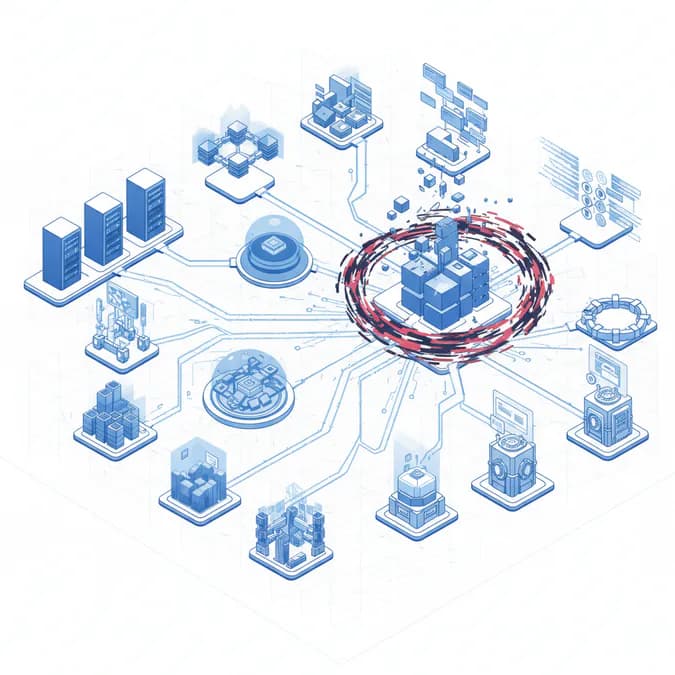
The rise of artificial intelligence (AI) has brought about transformative changes across various sectors, promising increased efficiency, automation, and innovation. However, this technological revolution also casts a long shadow on the cybersecurity landscape. The increasing sophistication and accessibility of AI tools have inadvertently created new avenues for malicious actors, resulting in substantial financial losses for individuals and organizations alike. Reports indicate that the AI threat is now costing Americans an estimated $16.6 billion each year, a figure that underscores the urgent need for proactive cybersecurity measures.
Understanding the AI Threat Landscape

The term "AI threat" encompasses a wide range of malicious activities that leverage artificial intelligence to compromise systems, steal data, and disrupt operations. These threats can manifest in various forms, including:
- AI-Powered Phishing Attacks: Traditional phishing attacks rely on generic emails and rudimentary deception techniques. AI-powered phishing, on the other hand, uses sophisticated natural language processing (NLP) to craft highly personalized and convincing messages. These messages can mimic the writing style of trusted contacts, making them incredibly difficult to detect.
- Automated Vulnerability Exploitation: AI can automate the process of identifying and exploiting vulnerabilities in software and systems. By analyzing vast amounts of code and network data, AI algorithms can quickly pinpoint weaknesses and launch targeted attacks with minimal human intervention.
- Deepfake Technology: Deepfakes, AI-generated synthetic media, can be used to create convincing but entirely fabricated videos and audio recordings. These deepfakes can be used to spread misinformation, damage reputations, and even manipulate financial markets.
- AI-Driven Malware: Malware infused with AI capabilities can evade traditional security defenses by learning and adapting to its environment. This type of malware can dynamically modify its code to avoid detection and optimize its attack strategy.
- Compromised AI Systems: AI systems themselves can become targets of cyberattacks. By compromising the training data or algorithms of an AI system, attackers can manipulate its behavior and cause it to make biased or incorrect decisions.
The Economic Impact of AI Threats
The $16.6 billion annual cost of AI threats represents a significant drain on the American economy. These costs are not limited to direct financial losses from theft and fraud but also include:
- Data Breach Costs: Data breaches resulting from AI-powered attacks can be incredibly expensive, involving costs related to incident response, legal fees, regulatory fines, and reputational damage.
- Business Disruption: AI-driven attacks can disrupt business operations, leading to lost productivity, revenue, and customer trust.
- Security Investments: Organizations are forced to invest heavily in AI-powered security solutions to defend against these evolving threats, further adding to the economic burden.
- Loss of Intellectual Property: AI can be used to steal valuable intellectual property, giving competitors an unfair advantage and undermining innovation.
Mitigating the AI Threat: A Multi-Layered Approach
Addressing the AI threat requires a comprehensive, multi-layered approach that combines technological solutions, human expertise, and proactive security practices. Key strategies include:
- AI-Powered Security Solutions: Deploying AI-powered security tools that can detect and respond to AI-driven attacks in real-time. These tools can analyze network traffic, user behavior, and system logs to identify anomalies and potential threats.
- Robust Vulnerability Management: Implementing a robust vulnerability management program that includes regular security assessments, penetration testing, and timely patching of vulnerabilities.
- Employee Training and Awareness: Educating employees about the risks of AI-powered phishing attacks and other social engineering tactics. Training should emphasize the importance of verifying the authenticity of emails and other communications before clicking on links or providing sensitive information.
- Data Security and Privacy: Implementing strong data security and privacy controls to protect sensitive information from unauthorized access and disclosure. This includes encryption, access controls, and data loss prevention (DLP) measures.
- Collaboration and Information Sharing: Fostering collaboration and information sharing between organizations, government agencies, and cybersecurity vendors to stay ahead of emerging AI threats.
- Ethical AI Development: Promoting ethical AI development practices that prioritize security, privacy, and fairness. This includes ensuring that AI systems are not biased or discriminatory and that they are used responsibly.
The Role of API Security
API security is a crucial component in mitigating the AI threat. APIs are increasingly used to connect AI systems with other applications and data sources, making them a potential target for attackers. Securing APIs requires a combination of authentication, authorization, encryption, and rate limiting.
The Bottom Line
The AI threat is a growing concern that demands immediate attention. The $16.6 billion annual cost highlights the significant economic impact of these threats. By adopting a multi-layered approach that combines technological solutions, human expertise, and proactive security practices, organizations can effectively mitigate the risks posed by AI-driven cyberattacks and protect their assets.
Key Takeaways
1. The AI threat is costing the American economy $16.6 billion annually, highlighting the urgency for enhanced cybersecurity measures.
2. AI-powered attacks include phishing, automated exploitation, deepfakes, and advanced malware.
3. A multi-layered approach is essential for mitigating these threats, combining technology, training, and collaboration.
Frequently Asked Questions (FAQ)
What is the AI threat? The AI threat refers to malicious activities that utilize artificial intelligence to compromise systems and data.
How much does the AI threat cost? The AI threat is estimated to cost the American economy $16.6 billion annually.
What are some strategies to mitigate the AI threat? Key strategies include deploying AI-powered security solutions, conducting regular vulnerability assessments, and training employees on security awareness.
For more information on cybersecurity strategies, visit our cybersecurity resources page.
To learn more about AI and its implications, check out this Forbes article on AI trends.