Cybersecurity professionals are on high alert following the disclosure of a critical security flaw affecting the GNU InetUtils telnet daemon (telnetd). This vulnerability, designated CVE-2026-32746, poses a significant risk as it allows an unauthenticated remote attacker to execute arbitrary code with elevated, root-level privileges. The exposure stems from a weakness in how telnetd handles specific input, potentially leading to complete system compromise. This article delves into the specifics of the Telnetd flaw, its potential impact, and recommended mitigation strategies.
Telnet, while historically significant, is an outdated protocol that transmits data in plaintext, making it inherently insecure. Its continued presence in legacy systems and embedded devices creates a persistent attack surface. The discovery of CVE-2026-32746 underscores the importance of regularly auditing and patching systems, especially those running older or less-maintained software.
Understanding the Telnetd Vulnerability (CVE-2026-32746)
The core of the vulnerability lies in a buffer overflow within the telnetd daemon. This occurs when the program receives more data than it can handle, leading to memory corruption. A skilled attacker can leverage this overflow to overwrite critical parts of the system's memory, ultimately injecting and executing malicious code. Because the telnetd process often runs with root privileges, the attacker gains complete control over the compromised system.
Technical Details of the Exploit
While the exact technical details of the exploit are still being analyzed, the general mechanism involves sending a specially crafted input string to the telnetd service listening on port 23. This input string exploits the buffer overflow, allowing the attacker to overwrite the return address on the stack. By controlling the return address, the attacker can redirect the program's execution flow to their injected code.
Impact of Successful Exploitation
A successful exploit of CVE-2026-32746 can have devastating consequences. An attacker gaining root access can:
- Install malware, including ransomware, keyloggers, and botnet agents.
- Steal sensitive data, such as usernames, passwords, financial records, and intellectual property.
- Modify system configurations, potentially disrupting critical services.
- Use the compromised system as a launchpad for further attacks against other systems on the network.
- Completely wipe or brick the system, rendering it unusable.
Who is Affected?
Any system running a vulnerable version of GNU InetUtils telnetd is potentially at risk. This includes:
- Legacy servers that have not been properly maintained.
- Embedded devices, such as routers, IoT devices, and industrial control systems, that rely on telnet for remote management.
- Older Linux distributions that include vulnerable versions of InetUtils.
It is crucial to identify and assess systems running telnetd within your environment to determine their vulnerability status.
Mitigation Strategies: Protecting Your Systems
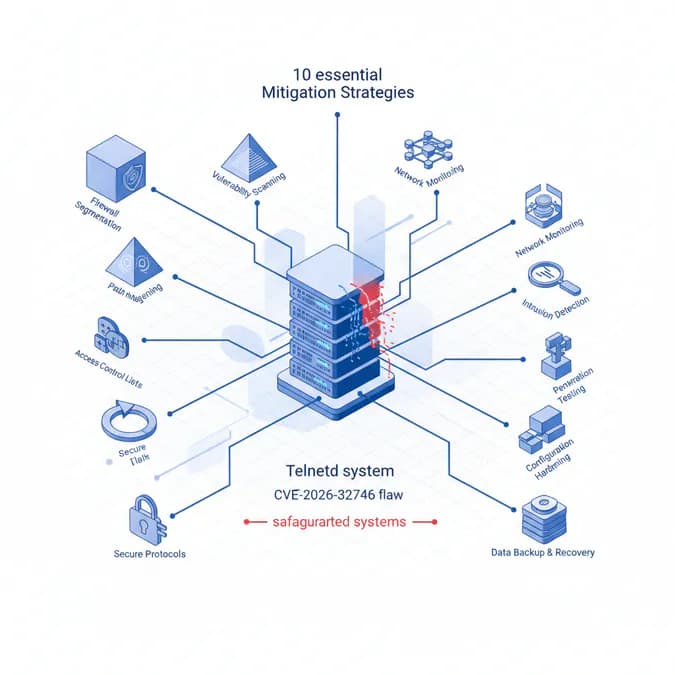
Given the severity of CVE-2026-32746, immediate action is required to mitigate the risk. Here are several recommended strategies:
1. Disable Telnetd
The most effective way to prevent exploitation is to disable telnetd entirely. Telnet is an outdated and insecure protocol that should be replaced with more secure alternatives, such as SSH.
2. Implement Network Segmentation
If disabling telnetd is not feasible, implement network segmentation to isolate vulnerable systems from the rest of the network. This limits the potential impact of a successful exploit.
3. Use Strong Authentication
If telnetd must be used, enforce strong authentication mechanisms, such as multi-factor authentication (MFA), to prevent unauthorized access.
4. Monitor Network Traffic
Implement network intrusion detection systems (IDS) and intrusion prevention systems (IPS) to monitor network traffic for suspicious activity. These systems can detect and block attempts to exploit the vulnerability.
5. Apply Patches (If Available)
Check for available patches from your operating system vendor or the GNU InetUtils project. Apply any available patches immediately to address the vulnerability. However, given the age of telnet and InetUtils, patches may not be readily available for all systems.
6. Consider Alternative Remote Access Solutions
Transition to more secure remote access protocols like SSH (Secure Shell) or VPNs (Virtual Private Networks) that encrypt data in transit and offer stronger authentication mechanisms.
The Importance of Proactive Security Measures
The CVE-2026-32746 vulnerability serves as a stark reminder of the importance of proactive security measures. Regularly auditing systems, patching vulnerabilities, and implementing strong security controls are essential to protect against cyberattacks. Organizations should also prioritize the decommissioning of outdated and insecure software, such as telnetd, to reduce their attack surface.
Key Takeaways
- CVE-2026-32746 is a critical vulnerability in GNU InetUtils telnetd that allows unauthenticated remote root access.
- Exploitation can lead to complete system compromise.
- Disable telnetd if possible and migrate to more secure alternatives like SSH.
- Implement network segmentation and monitor network traffic for suspicious activity.
- Prioritize patching and decommissioning outdated software.
FAQ
What is the Telnetd flaw?
The Telnetd flaw refers to a critical vulnerability in the GNU InetUtils telnet daemon that allows unauthorized remote access to systems.
How can I check if my system is vulnerable?
Identify systems running vulnerable versions of GNU InetUtils telnetd and assess their security status.
What should I do if my system is affected?
Immediately disable telnetd, implement strong security measures, and apply any available patches.
The Bottom Line
The discovery of this Telnetd flaw underscores the ongoing challenges of securing legacy systems and the importance of adopting a proactive security posture. By taking immediate action to mitigate the risk, organizations can protect themselves from potential cyberattacks and maintain the integrity of their systems.
For further reading, consider visiting authoritative sources such as CISA or NIST for guidelines on securing your systems against vulnerabilities like CVE-2026-32746.