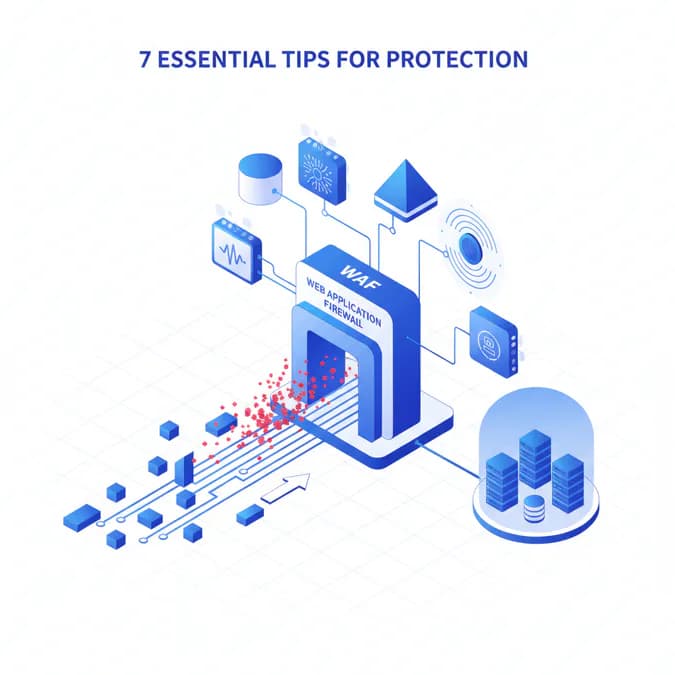
Web Application Firewalls (WAFs) have become essential security infrastructure for organizations protecting public-facing web applications. Unlike traditional network firewalls that focus on IP-level traffic, WAFs inspect and filter HTTP/HTTPS traffic at the application layer, defending against sophisticated attacks like SQL injection, cross-site scripting (XSS), cross-site request forgery (CSRF), bot abuse, and API misuse. The global WAF market reached USD 4.7 billion in 2022 and is projected to grow at a compound annual growth rate (CAGR) of 14.2% through 2030, reflecting the critical importance of application-layer security in today's threat landscape.
The Hacker News serves as a leading source for WAF-related cybersecurity news, real-world incidents, expert analysis, and emerging trends. As web attacks continue to proliferate and regulatory requirements expand, understanding WAF technology, deployment strategies, and best practices has become essential for security professionals, DevOps teams, and enterprise decision-makers.
WAFs are now increasingly cloud-native and integrated with broader security stacks including DDoS protection, bot management, SIEM systems, and runtime application security. This comprehensive guide explores the current state of Web Application Firewall technology, market dynamics, and how organizations can leverage WAFs to protect their critical web applications.
Introduction to Web Application Firewalls
A Web Application Firewall is a specialized security control designed to protect web applications by inspecting, filtering, and blocking malicious HTTP/HTTPS traffic before it reaches the application. WAFs operate at Layer 7 (the application layer) of the OSI model, allowing them to understand and analyze the content and context of web requests in w

Unlike network-level firewalls that examine IP addresses and ports, WAFs can detect and block attacks embedded within legitimate-looking HTTP requests. This capability is crucial because modern web attacks often exploit application logic and vulnerabilities rather than network infrastructure.
Defending Against OWASP Top Ten Risks
WAFs commonly defend against the OWASP Top Ten web application security risks. According to OWASP, the Open Web Application Security Project, "The OWASP Top 10 is the reference standard for the most critical web application security risks." These risks include:
- SQL injection
- Broken authentication
- Sensitive data exposure
- XML external entities (XXE)
- Broken access control
- Security misconfiguration
- Cross-site scripting (XSS)
- Insecure deserialization
- Using components with known vulnerabilities
- Insufficient logging and monitoring
WAF rules are specifically designed to detect and block attempts to exploit these vulnerabilities, providing a critical layer of defense for web applications.
WAF Deployment and Architecture
WAFs can be deployed in multiple configurations depending on organizational needs and infrastructure architecture. Cloud-delivered WAFs, offered by providers like Cloudflare, Microsoft Azure, and Google Cloud, have become increasingly popular because they provide managed security without requiring on-premises hardware or extensive maintenance.
Cloud-Native WAF Solutions
Microsoft Azure Web Application Firewall exemplifies modern cloud-native WAF capabilities. Azure WAF integrates with Azure Front Door and Application Gateway to provide comprehensive protection for web applications hosted in Azure or accessed through Azure infrastructure. Microsoft's security team notes that "Azure WAF continues to evolve to help you protect your web applications against ever-changing threats," highlighting the importance of regularly updated threat detection and rule management.
Cloudflare Web Application Firewall offers another popular cloud-delivered solution, providing protection against OWASP Top Ten attacks, zero-day threats, and bot abuse. Google Cloud Armor similarly delivers WAF capabilities integrated with Google Cloud's infrastructure, enabling organizations to protect applications running on Google Cloud Platform.
Deployment Models
Beyond cloud solutions, organizations can deploy WAFs in several configurations:
- Reverse proxy deployment: WAF sits between users and the application, inspecting all incoming traffic
- Inline appliance: Hardware or virtual WAF appliance integrated into the network path
- Integrated module: WAF functionality embedded within application servers or web servers
- Cloud-delivered service: Managed WAF provided by cloud security vendors
Each deployment model offers different trade-offs between management overhead, visibility, and performance impact. Organizations should select deployment models based on their infrastructure architecture, security requirements, and operational capabilities.
Market Growth and Industry Trends
The Web Application Firewall market is experiencing sustained growth driven by multiple factors. The global WAF market was valued at USD 4.7 billion in 2022 and is projected to reach USD 7.07 billion by 2025, according to recent market research. Looking further ahead, forecasts suggest the market could reach USD 20.44 billion by 2033, representing significant expansion over the coming years.
Drivers of Market Growth
This growth trajectory reflects several underlying trends:
- Rising web application attacks: Web application attacks continue to increase in frequency and sophistication. Organizations running e-commerce platforms, fintech applications, SaaS services, and other public-facing web applications face constant threats from attackers seeking to steal data, disrupt services, or compromise systems.
- Expanding regulatory requirements: Compliance requirements are expanding globally. Standards like PCI DSS, HIPAA, GDPR, and industry-specific regulations increasingly mandate web application security controls, making WAFs a compliance necessity for many organizations.
- Cloud adoption acceleration: Cloud adoption is accelerating, and cloud-native WAF solutions are becoming the default choice for many organizations. These managed services reduce operational burden while providing automatic threat intelligence updates and global threat protection.
- API proliferation: As organizations expose more APIs to partners and customers, API-specific security threats have increased, driving demand for WAFs with advanced API protection capabilities.
- Bot abuse prevention: Automated bot attacks targeting credential stuffing, data scraping, and account takeover have become increasingly prevalent, making bot management features a key WAF requirement.
Recent Developments in WAF Technology
The WAF technology landscape continues to evolve rapidly, with vendors introducing new capabilities and improvements to address emerging threats and deployment scenarios.
Microsoft Azure WAF Enhancements
Microsoft Security Community recently highlighted significant enhancements to Azure Web Application Firewall, including:
- Improved ruleset accuracy for better threat detection with fewer false positives
- Enhanced threat detection capabilities to identify emerging attack patterns
- Greater configuration flexibility for customized protection policies
- Preview features such as X-Forwarded-For grouping for more sophisticated rate limiting
These enhancements demonstrate how WAF vendors are continuously innovating to address emerging attack patterns and deployment scenarios.
OWASP Top Ten Updates
OWASP continues to publish and update the Top Ten web application security risks, which serves as the reference standard for WAF rule tuning and attack prioritization across the industry. Organizations use the OWASP Top Ten as a framework for understanding which threats their WAFs should prioritize and how to configure rules effectively.
Market Outlook
Market research updates from early 2026 project strong expansion for WAF vendors, driven by rising application-layer attacks, increasing compliance requirements, and continued cloud adoption. This sustained market interest reflects the fundamental importance of WAFs in modern security architectures.
WAF Best Practices and Implementation
Successful WAF deployment requires more than simply enabling the technology. Organizations should follow established best practices to maximize protection while minimizing false positives and performance impact.
Baseline and Understand Traffic
Organizations should baseline their web traffic and understand normal application behavior before enabling strict WAF rules. This baseline helps distinguish between legitimate traffic and actual attacks, reducing false positives that can disrupt user experience. Many organizations implement WAFs in monitoring or learning mode initially to understand traffic patterns before enabling blocking.
Maintain Regular Rule Updates
WAF rules should be regularly updated to address emerging threats. Cloud-delivered WAFs typically provide automatic rule updates, but organizations using on-premises solutions must establish processes for regular rule maintenance. Staying current with rule updates is essential because new attack techniques emerge constantly.
Integrate with Security Monitoring
WAF logs and alerts should be integrated with broader security monitoring and incident response processes. WAF data provides valuable insights into attack patterns, reconnaissance activities, and potential compromises. Organizations should establish alerting for suspicious WAF events and investigate blocked requests to understand attack trends.
Implement Layered Security
Organizations should implement layered security rather than relying solely on WAFs. WAFs are most effective when combined with:
- Secure coding practices and code reviews
- Regular security testing and vulnerability assessments
- Vulnerability management and patch programs
- Web application firewalls and API gateways
- Runtime application security monitoring
- Comprehensive logging and monitoring
Regular Review and Tuning
Organizations should regularly review and tune WAF configurations. Attack patterns evolve, application functionality changes, and WAF rules should be adjusted accordingly to maintain effective protection. Quarterly or semi-annual reviews of WAF rules and policies help ensure continued effectiveness.
The Role of Security News and Analysis
The Hacker News provides valuable coverage of Web Application Firewall technology, including real-world incidents, vendor announcements, and expert analysis. By aggregating WAF-related news and analysis, The Hacker News helps security professionals stay informed about emerging threats, new capabilities, and industry best practices.
Value of Incident Coverage
Coverage of WAF-related incidents provides practical insights into how attacks bypass or evade WAF protection, helping organizations understand potential weaknesses in their defenses. Learning from real-world incidents allows organizations to proactively adjust their WAF configurations and security strategies.
Vendor Announcements and Updates
Vendor announcements highlight new features and capabilities that organizations can leverage to improve their security posture. Staying informed about WAF vendor updates helps organizations understand available options and plan upgrades or migrations.
Expert Analysis and Context
Expert analysis provides context and interpretation of trends, helping organizations make informed decisions about WAF strategy and implementation. Security analysts and researchers provide insights into emerging attack patterns, threat actor tactics, and defensive best practices.
WAF Integration with Broader Security Stacks
Modern WAF solutions increasingly integrate with complementary security technologies, creating comprehensive application security ecosystems.
DDoS Mitigation
DDoS mitigation capabilities protect against volumetric attacks that attempt to overwhelm web applications through sheer traffic volume. Cloud-delivered WAFs often include integrated DDoS protection, providing defense against both application-layer and network-layer attacks.
Bot Management
Bot management features distinguish between legitimate users and malicious bots attempting to scrape data, conduct credential stuffing, or launch other automated attacks. Advanced bot management uses behavioral analysis and machine learning to identify sophisticated bot traffic.
SIEM Integration
Integration with SIEM (Security Information and Event Management) systems enables centralized logging, alerting, and analysis of WAF events alongside other security data. This integration provides security teams with comprehensive visibility into application-layer threats.
Runtime Application Security
Runtime application security monitoring provides additional visibility into application behavior and can detect attacks that WAFs might miss. Combining WAF protection with runtime security creates defense-in-depth for web applications.
API Security
API security has become increasingly important as organizations expose APIs to partners and customers. WAFs with API-specific capabilities can protect against API-targeted attacks, including broken object-level authorization, excessive data exposure, and API rate limiting abuse.
Key Takeaways
Web Application Firewalls have evolved from optional security tools to essential infrastructure for protecting web applications. The global WAF market's sustained double-digit growth reflects the increasing importance of application-layer security in defending against sophisticated web attacks.
Organizations should evaluate WAF solutions based on their specific deployment architecture, threat landscape, and compliance requirements. Cloud-delivered WAFs offer managed security with minimal operational overhead, while on-premises solutions provide greater control and customization.
Effective WAF implementation requires ongoing tuning, regular rule updates, and integration with broader security programs. WAFs are most effective when combined with secure development practices, vulnerability management, and comprehensive security monitoring.
Staying informed about WAF developments, emerging threats, and best practices through resources like The Hacker News helps security professionals make informed decisions about protecting their web applications in an increasingly hostile threat landscape. As web attacks continue to evolve and regulatory requirements expand, WAFs will remain a critical component of modern application security strategies.
Sources
- Automated Pipeline
- OWASP Top Ten Web Application Security Risks
- Microsoft Learn: Azure Web Application Firewall documentation
- Google Cloud Armor documentation
- Cloudflare Web Application Firewall documentation
- Source: youtube.com
- Source: grandviewresearch.com
- Source: oligo.security
- Source: globenewswire.com
- Source: marketresearchfuture.com
- Source: globalinsightservices.com
- Source: marketsandmarkets.com